If you've spent more than 30 seconds in Sedona, somebody has mentioned the vortexes — energetic 'power spots' where the earth's electromagnetic field is supposedly amplified. Locally the term gets used so casually that you'll see vortex tours, vortex maps, vortex jewelry, and vortex-aligned wedding photographers. The science is contested at best. The experience of standing at one is real.
This guide covers the four most-visited vortex sites, the realistic experience at each, and how to visit them without trampling fragile red-rock terrain.
What a 'vortex' actually is (and isn't)
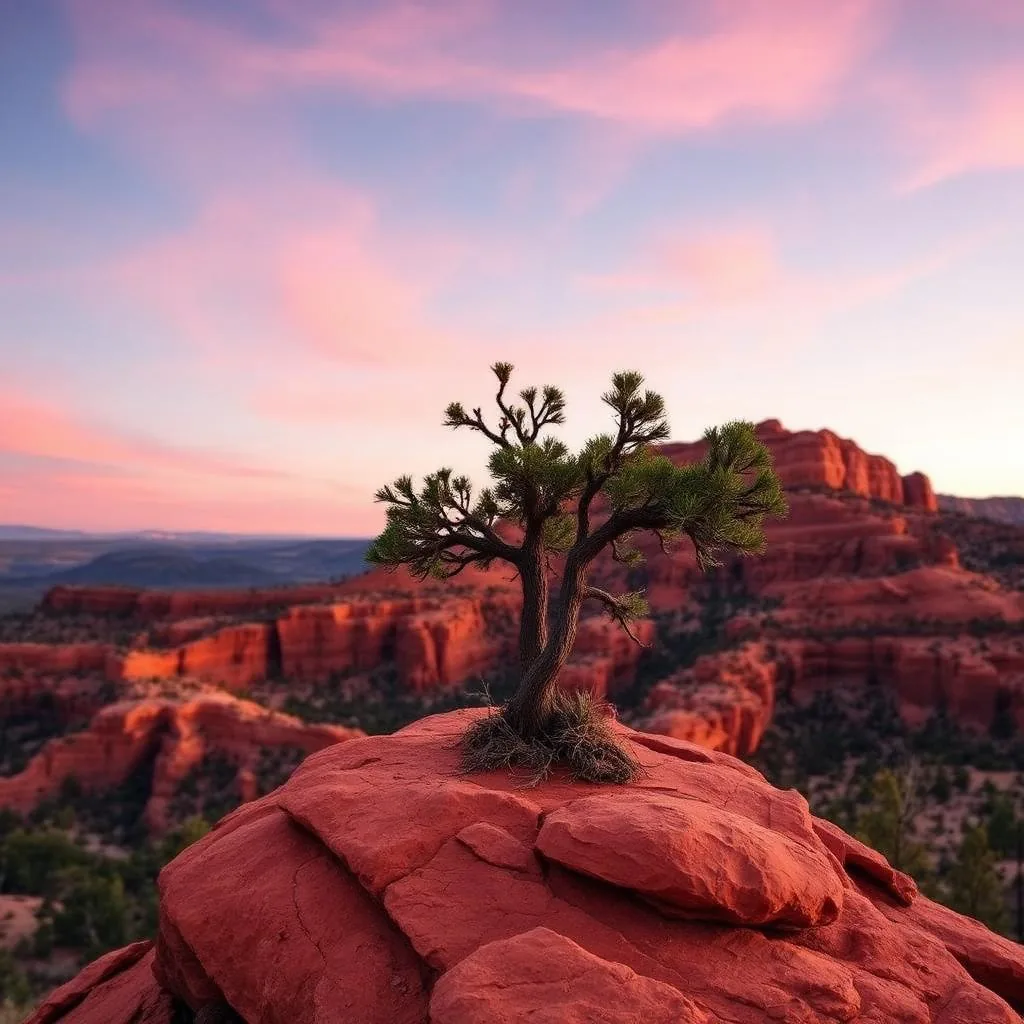
The Sedona vortex concept was popularized by psychic Page Bryant in 1980. The claim is that certain spots in Sedona — usually marked by spiral-growth juniper trees — concentrate spiritual or electromagnetic energy. The U.S. Geological Survey has measured background EMF at the sites and found nothing unusual. What is unusual is the geology: dramatic red sandstone landforms, panoramic exposure, and a high-desert quiet that most visitors don't get in their normal lives. Whether you call that a vortex or a really good view is up to you.
Bell Rock (the easiest)
Bell Rock is the bell-shaped formation at the south entrance to the village of Oak Creek, with its own dedicated parking lot ($5 Red Rock Pass required). The Bell Rock Pathway is a flat 0.8-mile walk that gets you to the base. You can scramble up the lower slopes if you want elevation — most visitors stop at the saddle on the north side, sit, and feel whatever they came to feel.
Cathedral Rock (the photogenic one)
Cathedral Rock vortex is technically the saddle between Cathedral's spires — a strenuous 1.2-mile, 740-ft-gain climb up a steep red rock chute. It's a Class 3 scramble in places. The payoff is one of the most famous views in the Southwest. The trailhead parking lot fills by 8 AM on weekends; arrive early or use the Yavapai Vista shuttle.
Airport Mesa (the sunset one)
Airport Mesa Vortex is a saddle on the ridge above the small Sedona airport — a 0.5-mile walk from the lower parking lot, or a 5-minute walk from the upper one. This is the easy-access vortex and arguably the best sunset spot in town. Get there 45 minutes before sunset, sit on the rocks facing west, and watch Capitol Butte glow.
Boynton Canyon (the dramatic one)
Boynton Canyon vortex sits up a short side trail off the main Boynton Canyon Trail — a 0.4-mile, steep, rocky climb to a juniper-covered knoll between two red-rock cliff faces. It's the most theatrical of the four sites and feels the most genuinely set-apart. The trailhead is on the west side of Sedona; parking fills early.
- Bell Rock (easiest, family-friendly)
- Cathedral Rock (strenuous, most photogenic)
- Airport Mesa (best sunset, easy access)
- Boynton Canyon (most dramatic setting)
How to visit responsibly
Sedona's red-rock crust is fragile — what looks like dirt is often biological soil that takes decades to recover from a footprint. Stay on marked trails. Don't build cairns, stack rocks, or scratch initials. Don't leave crystals, sage, or trinkets behind — rangers haul out hundreds of pounds of these annually. The vortex experience, real or imagined, is incompatible with leaving trash.
Frequently asked questions
Are the Sedona vortexes real?
There's no measurable electromagnetic anomaly at the sites. The dramatic geology and quiet are real — many visitors report a meaningful experience regardless of the science.
Which Sedona vortex is best?
Airport Mesa for sunset and easy access; Cathedral Rock for the most iconic view; Bell Rock for an effortless visit.
Do you need a permit to visit Sedona vortexes?
Most trailheads require a Red Rock Pass ($5/day or $15/week), available at trailhead kiosks and visitor centers.