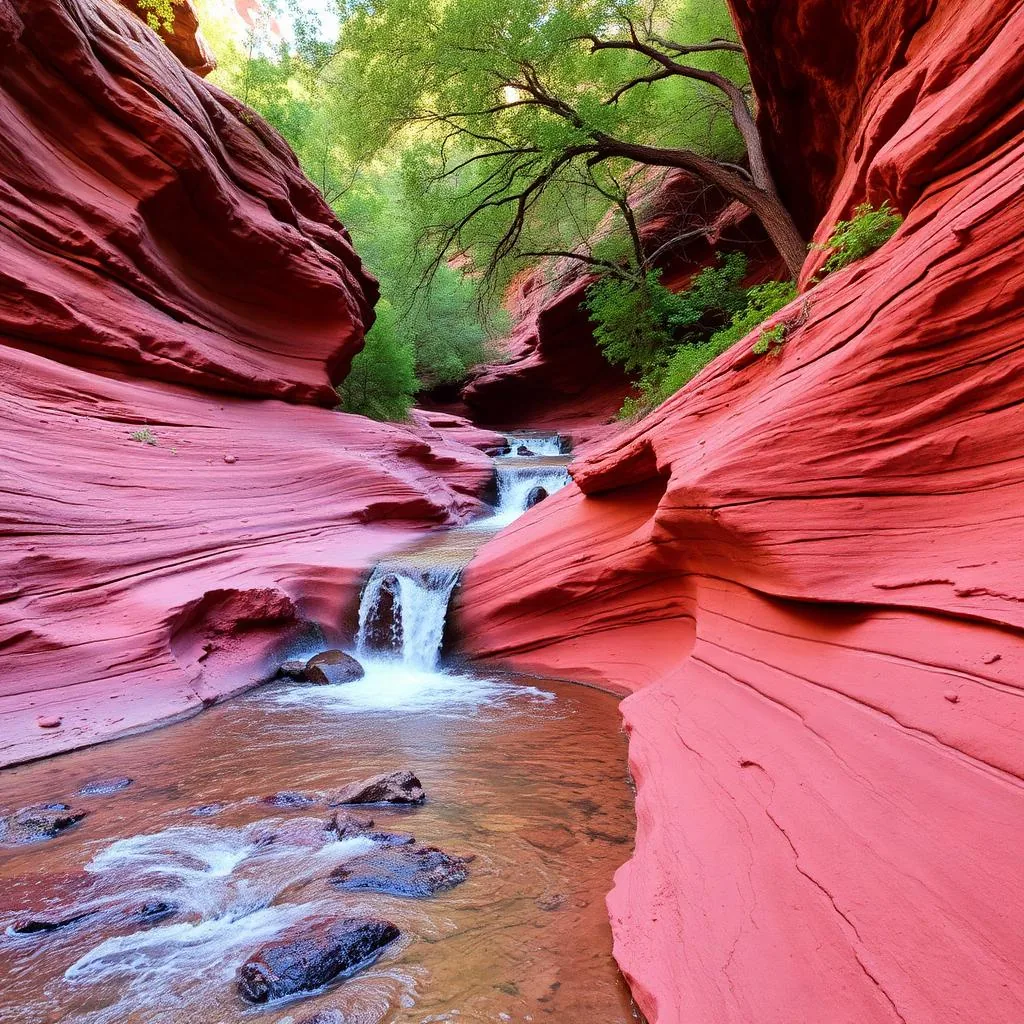
The first time I went down Slide Rock, I came out of the chute with a quarter-sized hole in the back of my swimsuit, two scraped elbows, and a grin I couldn't shake for an hour. That's basically the experience in miniature — it is exactly as fun as the photos make it look, and the sandstone takes a small toll on whatever fabric and skin it touches. Worth it. Plan accordingly.
Slide Rock State Park is a section of Oak Creek seven miles north of Sedona where the water has polished a series of sandstone chutes into a slick natural water slide. It's the kind of thing that sounds too good when someone describes it, and then you visit and it lives up to the photos. The catch — and there is always a catch with Sedona — is the crowds and the parking. Both are fixable if you plan around them, and that's most of what this guide is about.
What it actually is
Slide Rock is a 43-acre state park in the middle of Oak Creek Canyon, seven miles north of Sedona on AZ-89A. The signature feature is an 80-foot natural sandstone chute with about a 7% grade — water flowing over centuries has smoothed the rock into a surface you can actually slide down on your butt (or, if you brought one, on a sturdy butt-cover that you don't mind sacrificing). There are also several deeper pools where the creek collects between chutes, perfect for jumping in.
The site was originally the Pendley homestead, a working apple orchard established in 1912. Frank Pendley irrigated it with a hand-dug ditch from Oak Creek that still functions. The orchard is still there, with about 300 trees, and it's surprisingly beautiful in October when the leaves turn yellow against the red rock walls of the canyon.
When to go (and when absolutely not to)
Here's the honest truth nobody tells you upfront: the park hits capacity by 10 AM almost every summer weekend, and once full, the rangers close the gates until enough cars leave to make room. People have been known to wait 2+ hours in a line of running cars on a two-lane highway with no shade. It is miserable.
The fix is brutal but simple. Option one: arrive at 8 AM sharp on a weekday in June. Option two: arrive at 7:45 AM on a Saturday in June, which gets you in but also means a 5 AM Phoenix departure. Option three: skip summer weekends entirely and go in shoulder season. May and September water is cold but doable (mid-60s), the chutes have plenty of flow, and crowds are about 30% of peak. October is for the orchard and fall color — not really for swimming, though I've seen brave teenagers do it.
And one note: spring runoff from Flagstaff snowmelt can make the creek dangerously fast in late March and early April. The park sometimes closes the slide during those windows. Check ahead.
What to bring (the swimsuit warning is real)
Wear the cheapest swimsuit you own. I'm completely serious about this. The sandstone is grippy in a way that destroys fabric, especially anywhere you make contact during the slide. Board shorts with reinforced seats are ideal. A rash guard saves your back and shoulders. Bikini bottoms in particular do not survive — wear something with more coverage or layer.
Water shoes are mandatory. Not optional, not nice-to-have, mandatory. The sandstone is slick where the algae grows and going barefoot means stitches eventually. Cheap Tevas or Keens work fine; the foam Crocs people inevitably try do not have enough grip.
Other essentials: a beach towel that you don't love (the red mud stains in a way that does not wash out), sunscreen for the open creek sections (you will be in the sun for hours), reef-safe if you have a choice, and snacks. The on-site food is minimal — basically a small snack shack. Cash for the entrance fee or a card; it's $30 per car in summer, $20 in winter, with up to four adults included.
- Old swimsuit or board shorts (will get shredded)
- Water shoes with real grip — not flip-flops
- Rash guard for the slide itself
- Beach towel you don't mind staining
- Sunscreen (the canyon focuses light)
- Snacks and a cooler — food on-site is minimal
- Cash or card for $30 summer / $20 winter entry
Beyond the slide
Most visitors stay in the main creek area near the slide and never explore the rest of the park, which is a shame. There's a 0.3-mile orchard trail through the historic Pendley apple trees, a tiny museum in the original Pendley homestead house with photos of the family and old farming equipment, and a series of quieter swimming holes upstream if you walk five to ten minutes past the main crowd. Those upstream pools are deeper and significantly less busy.
The Slide Rock Market across the highway from the park entrance sells fresh apple cider donuts in fall that are the kind of thing you'll think about for weeks. Non-negotiable stop if you're there between mid-September and Thanksgiving.
Combining Slide Rock with the rest of the canyon
If you have the full day, do Slide Rock in the morning and the rest of Oak Creek Canyon in the afternoon. The Oak Creek Canyon Vista turnoff at the top of the canyon (5 miles north of Slide Rock) has a Navajo art market and one of the best views in the state. Cave Springs Campground and Bootlegger picnic area both have quieter creek access. Or head down to Sedona itself for dinner — the Hideaway House on the creek in Tlaquepaque is the most reliable patio.
Frequently asked questions
How much does Slide Rock State Park cost?
Entry is $30 per vehicle in summer (May through September) and $20 in winter, with up to 4 adults included. Each additional adult is $3.
Is Slide Rock open year-round?
Yes, but the swimming season is roughly May through September. In winter, the park stays open for hiking, the orchard, and photography, but the water is too cold for the slide.
How long do people stay at Slide Rock?
Most visitors stay 3 to 4 hours. Bring lunch and you'll easily fill a half-day. If you arrive at 8 AM and stay until early afternoon, you'll see the whole park and beat the worst of the heat.
Is the creek water clean?
Oak Creek is regularly tested. After heavy rain, E. coli levels can spike from runoff and the park sometimes posts advisories — check the park's official site or the bulletin board at the entrance before getting in.