The first time I went up to Lowell I made the rookie mistake: I booked a daytime-only ticket, looked at the Clark Refractor through a glass case, listened to a great talk about Pluto, and then drove back to my hotel just as the sky was getting interesting. Lowell at night is the entire point. The whole campus changes character around 7:30 PM — docents stop talking about history and start handing you a flashlight with red film over the lens and pointing you toward a line for whichever scope is aimed at Saturn that evening.
What's amazing is that the same admission ticket covers both. You can walk in at 4 PM, do the historic tour, walk down the hill into downtown Flagstaff for dinner, and come back at 8 PM for the part most people accidentally skip. I now refuse to let anyone visiting me from out of state do it any other way.
What's actually on Mars Hill
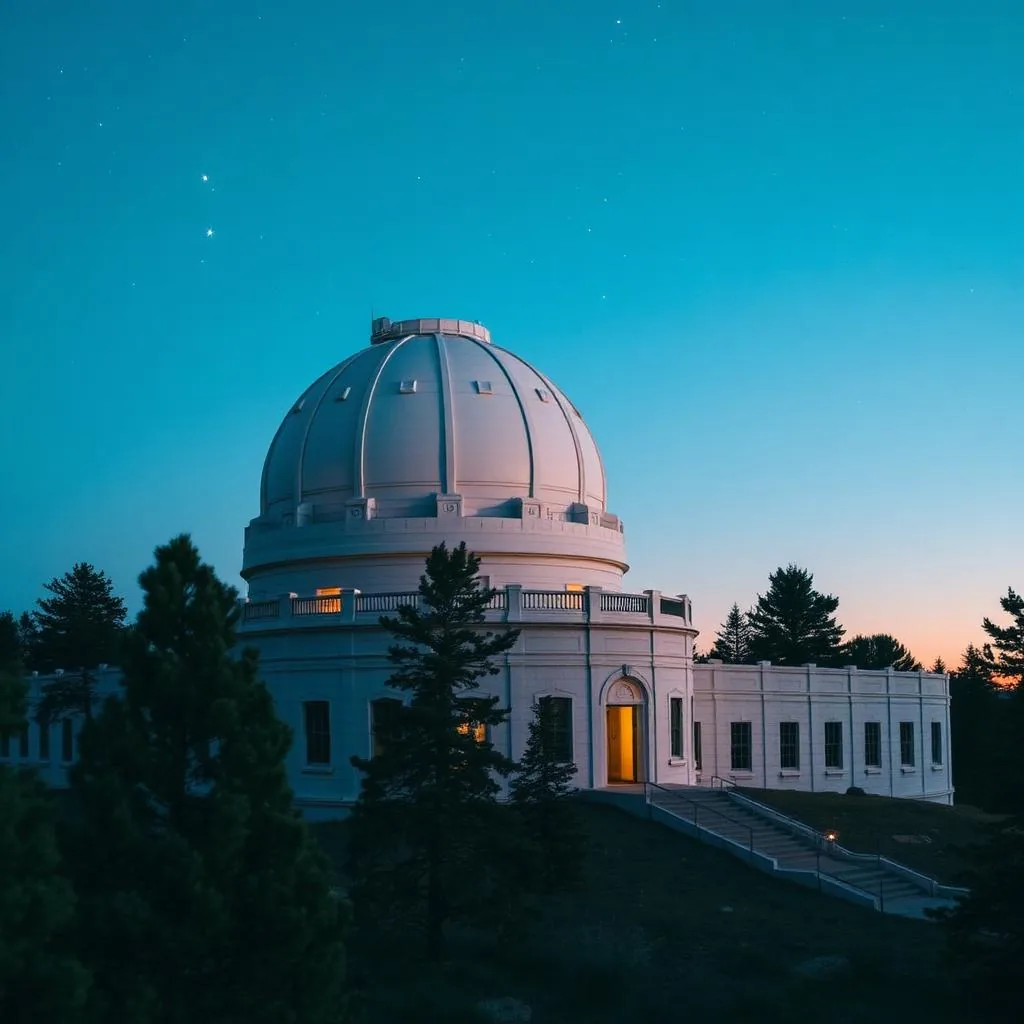
The campus is small enough to walk in 15 minutes but dense with history. The Clark Refractor, built in 1896, is a 24-inch brass-and-mahogany telescope that sits under a hand-cranked wooden dome that still works the way it did when Percival Lowell was sketching his (very wrong) Mars canals through it. NASA later used the Clark for the lunar mapping that made the Apollo landings possible — a building that has been continuously doing useful science for 130 years is rare.
Next door is the Pluto Discovery Telescope, the 13-inch astrograph Clyde Tombaugh pointed at the sky in 1929 and 1930. The actual blink comparator he used — the strange machine that flickered two photographic plates back and forth until a moving dot appeared — is on display in the museum a few steps away. Standing in that room genuinely got me. A kid from a Kansas farm spotted a planet by squinting at flickering glass.
The newer additions matter too. The Giovale Open Deck Observatory opened in 2019 with six research-grade telescopes that the public is allowed to look through at night. And the Astronomy Discovery Center, finished in late 2024, added a full-dome theater, a working planetarium, and a quiet open-air deck for naked-eye stargazing.
Day vs. night — the sandwich strategy
Tickets are around $35 for adults and cover the same calendar day from open to close. Daytime gets you the historic-telescope tours, the solar viewing through filtered scopes (the sun through hydrogen-alpha is genuinely beautiful), the museum, the new Discovery Center exhibits, and any docent talks happening on the hour.
Night is the headline. Flagstaff was the world's first International Dark Sky City, so even though Lowell is a mile from a downtown with restaurants and bars, the sky overhead is dramatically darker than anything you'll see near Phoenix. On a clear moonless night the Milky Way is a smear so bright it casts a shadow on the deck.
My order, every time: arrive 4 PM, do the Clark and Pluto tours first while there's still light, hit the museum, drive or walk down Santa Fe into downtown for an early dinner around 6, and be back at the gate by 7:30 to grab a deck spot before the lines build.
Tickets, weather, what to wear
Tickets are timed-entry and sold through lowell.edu. Summer weekends sell out, and any night around a meteor shower, eclipse, or planetary conjunction goes fast — book at least a week or two ahead from May through August. Off-season weeknights you can sometimes walk up.
Best night-viewing months are September through May. Summer is gorgeous, but afternoon monsoon storms cloud out a meaningful percentage of July and August evenings, and there's nothing more deflating than driving up only to have docents apologize and offer a partial refund.
Pack like you're going to a high school football game in November. Lowell sits at 7,200 feet, which means even an 80-degree Flagstaff afternoon can drop to the upper 30s by 10 PM. I wear long pants, real shoes, a fleece, and bring a beanie and gloves I can stuff in my pockets. Two hours of standing still on a metal deck is colder than you'd think.
Make a full Flagstaff evening of it
Lowell is a 5-minute drive (or a downhill 20-minute walk) from downtown Flagstaff, which is the rare Arizona small-town center that's actually walkable and has good food. My standing dinner picks: Tinderbox Kitchen for a proper sit-down meal, Pizzicletta for the best pizza in northern Arizona, or Brix Restaurant if I want something quieter and more wine-bar.
If you're staying overnight, the Hotel Monte Vista is the historic downtown choice (1926, supposedly haunted, definitely creaky), and the Drury Inn on Milton Road is the easier modern option. Either lets you walk back to the car after night viewing without driving tired.
Who I send here
Anyone with a kid over the age of seven. Anyone who reads science fiction. Anyone who has never looked at Jupiter through a real telescope and seen the four Galilean moons as actual dots arranged in a line. I've taken in-laws, skeptical teenagers, and a friend who insisted she wasn't interested in astronomy, and Lowell at night converted all of them.
It is not, fair warning, a great rainy-day backup. The historic-telescope tours and museum will still happen if it's cloudy, but the deck closes and you don't get the actual stargazing. Always check the forecast and shift dates if you can.
Frequently asked questions
Is Lowell Observatory worth visiting?
Yes — combining the historic Clark and Pluto telescopes with modern night-sky viewing in a designated Dark Sky City makes it one of the best observatory experiences in the country. Just don't skip the night portion.
Can you look through the telescopes at Lowell Observatory?
Yes. Daytime solar viewing through filtered scopes, and nighttime viewing through the historic Clark Refractor plus six modern telescopes on the Giovale Open Deck. Included in admission.
How long should I plan for Lowell Observatory?
Plan 3 hours in daylight plus 2 hours for the evening telescope viewing. The half-day-plus-evening sandwich with dinner downtown in between is the ideal visit.
What should I wear to night viewing at Lowell?
Dress for 30–40°F any time of year. Long pants, closed shoes, a fleece, and a hat. The deck is at 7,200 feet of elevation and you'll be standing still for 1–2 hours.