The first time I stood on the rim of Meteor Crater I was twelve, on a family road trip from Phoenix to the Grand Canyon, and I remember thinking it was just a hole in the ground. Reader, I was wrong. The second time, twenty-five years later, I went with a friend who happens to be a planetary geologist, and she spent twenty minutes at the first overlook just standing there saying "oh wow, oh wow." That trip rearranged how I think about the place.
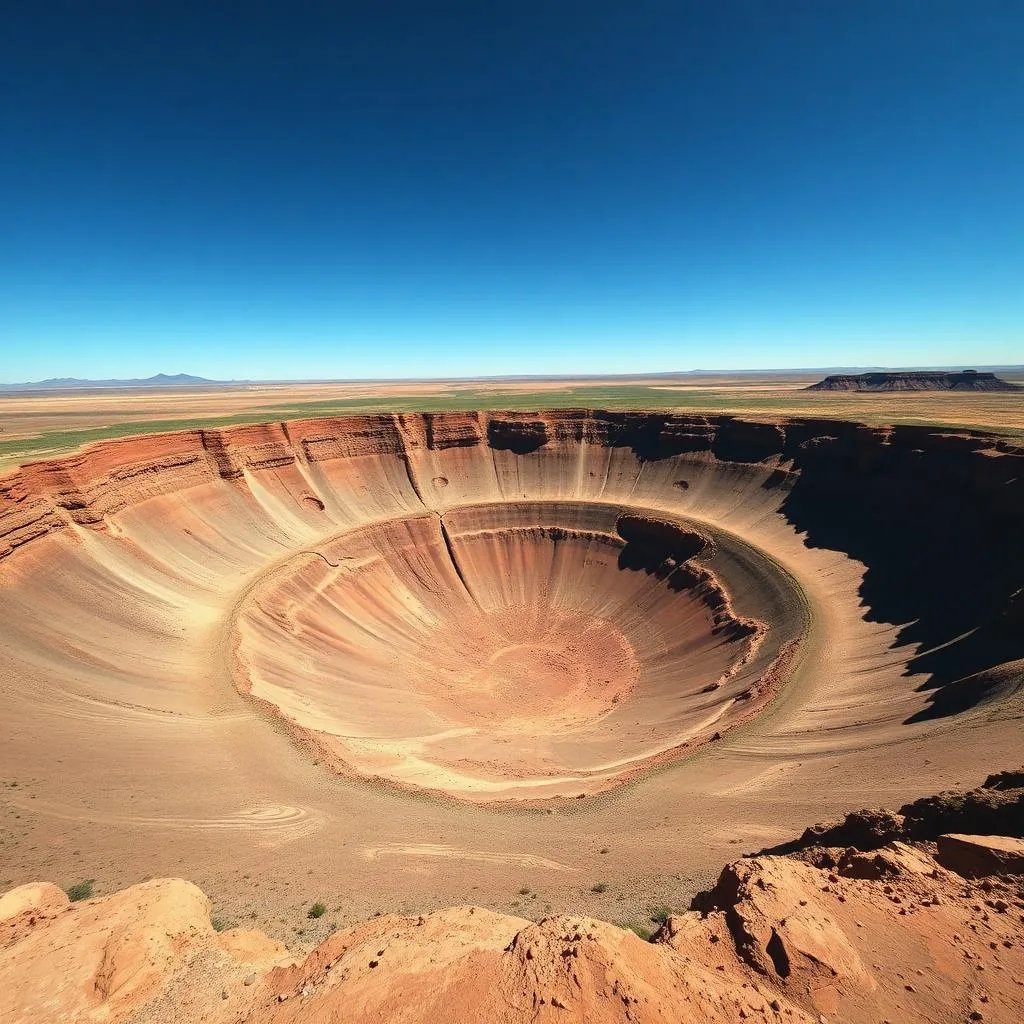
Meteor Crater — officially the Barringer Crater — is the best-preserved impact crater on Earth. About 50,000 years ago a 150-foot iron-nickel meteorite slammed into what's now northern Arizona at roughly 26,000 miles per hour, releasing energy equivalent to about ten megatons of TNT and gouging a bowl three-quarters of a mile across and 550 feet deep. It is the only impact crater on the planet where you can stand on the rim and still see, with your own eyes, the way the explosion folded the bedrock back on itself. It's a private attraction owned by the Barringer family since 1903, about 35 miles east of Flagstaff and 18 miles west of Winslow, and the $25 admission is genuinely the source of most online complaints. Here's the honest accounting.
What you actually get for $25
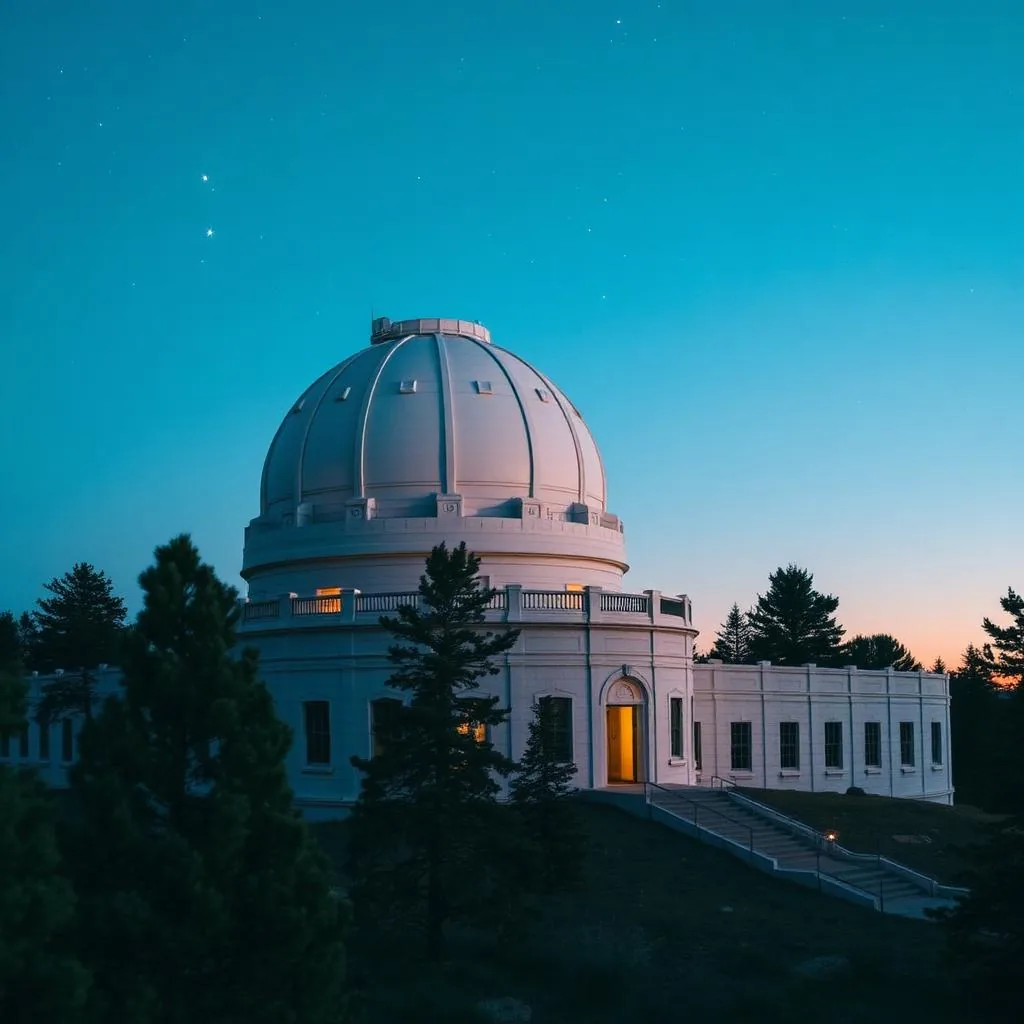
The Discovery Center museum is, surprisingly, the part of the visit most people underrate going in. It is genuinely well-done — a serious science museum about impact cratering, planetary geology, and the early Apollo program. The 1,400-pound Holsinger Meteorite, the largest single fragment ever recovered from the crater, sits in the middle of the lobby and you're encouraged to touch it. There's a full-scale Apollo space capsule — NASA actually trained Apollo astronauts at this crater in the 1960s because it was the closest analogue to the lunar surface they could reach — and a high-quality immersive film about the impact event that I expected to be cheesy and wasn't.
Outside, three observation decks along the rim let you walk a few hundred yards in either direction with serious telescopes mounted on swivels. There is no public trail down into the crater — the entire bowl and rim are privately owned and access below the rim is restricted to preserve the impact features for ongoing research.
The included ranger-led rim tour — take it
This is the part that turns a quick photo stop into an actual visit, and I'd argue it's the single thing that justifies the price. The hour-long guided rim walk runs hourly during operating hours, is included with admission, and is led by a staff guide who walks you along a developed paved path while explaining the geology, the impact mechanics, and the strange story of Daniel Barringer himself — the mining engineer who bought the crater in 1903 convinced he'd find a giant intact iron meteorite buried underneath and spent the next twenty-seven years drilling for it. (Spoiler: the meteorite vaporized on impact. Barringer drilled himself into the ground financially. The science he generated in the process founded the modern field of impact cratering.)
If you skip the ranger walk and just go to the overlooks, you'll see a hole. If you take the walk, you'll understand what you're looking at, and that is the difference between a forgettable stop and a story you tell later.
Is the $25 actually worth it?
Honest answer: yes if you're a space, geology, or science-history person, or you're traveling with kids who care about any of those things. The combination of the Discovery Center, the ranger walk, and the actual physical experience of standing on the rim is genuinely substantial — easily two to three hours of content, more if you watch the film.
If you're just driving I-40 and stopping for a quick photo, $25 per adult will sting, because there's no free view of the crater from anywhere outside the paid complex. The Barringers own all of the rim. My honest take: if you're already in the area and curious, pay it and do the full visit. If you're trying to save money on a long road trip, skip it and prioritize the Petrified Forest or Walnut Canyon instead — both are National Park Service sites with much smaller fees and genuinely great experiences.
What to combine it with
Heading west back toward Flagstaff: stop in Winslow. The "Standin' on the Corner" park from the Eagles song is right downtown and is exactly the kind of corny photo op that's still fun. La Posada Hotel, the restored Mary Colter masterpiece from 1929, has one of the best historic-hotel restaurants in the state (the Turquoise Room) and is worth a lunch or dinner detour even if you're not staying there.
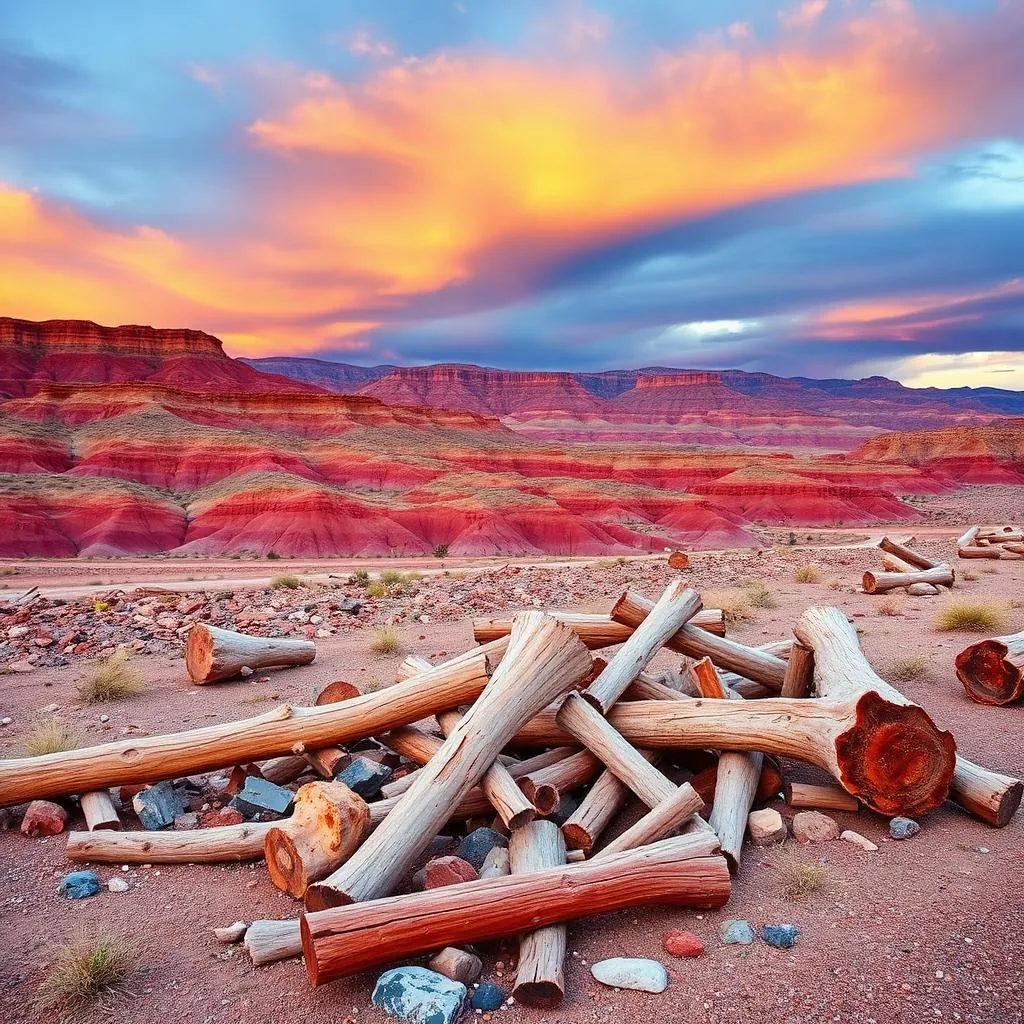
Heading east: Petrified Forest National Park is about 70 minutes farther on I-40. Pairing Meteor Crater with Petrified Forest as a single day from Flagstaff is a great science-and-deep-time itinerary, but it's a long day — leave Flag by 8 AM, plan dinner in Holbrook on the way back. Heading north into the high desert, Wupatki and Sunset Crater make a different kind of pairing — three different geological time scales, all within an hour of each other.
Practical details
Open daily, typically 7 AM to 7 PM in summer and 8 AM to 5 PM in winter — check the website before driving. Adult tickets around $25, kids under 17 around $15 (subject to change). The visitor complex has a clean restroom, a serviceable gift shop, and a Subway sandwich shop if you didn't bring lunch. There are no shade structures on the rim trail itself, so bring a hat in summer. The wind on the rim is real; layer up even on warm days.
Frequently asked questions
Can you go down into Meteor Crater?
No. The crater interior is closed to the public for preservation; the meteorite fragments and impact-melted rocks on the floor are still scientifically valuable. Viewing is from three rim observation decks only.
How long do you need at Meteor Crater?
2 to 3 hours is right — enough for the Discovery Center museum, the included ranger-led rim walk, the film, and the observation decks. Don't try to fit it into a quick 30-minute stop; you'll feel cheated by the price.
How far is Meteor Crater from Flagstaff?
35 miles east on I-40 — about a 40-minute drive. From Winslow it's 18 miles west, around 20 minutes.
Is Meteor Crater kid-friendly?
Yes, especially for kids interested in space, dinosaurs, or science. The Discovery Center has hands-on exhibits, the Apollo capsule is a hit, and the ranger talks are pitched well for ages 8 and up. Strollers work on the rim path.