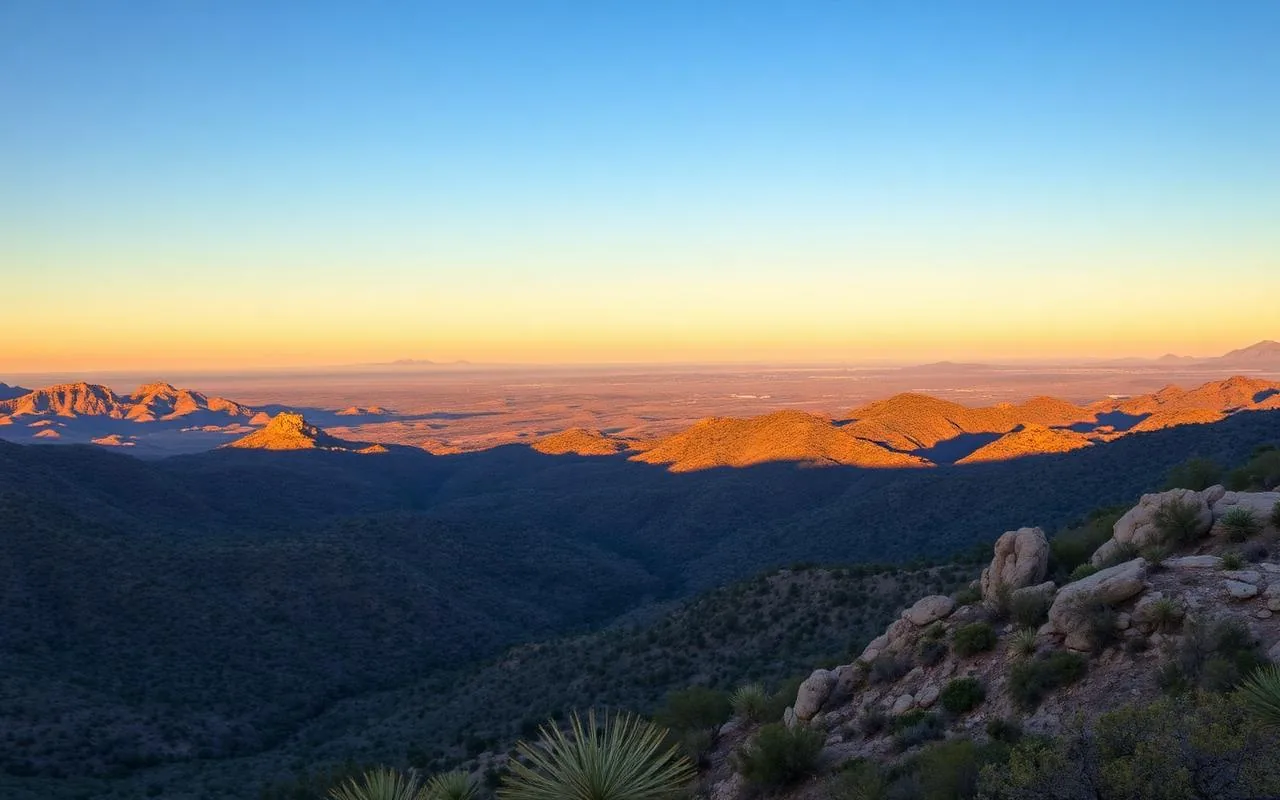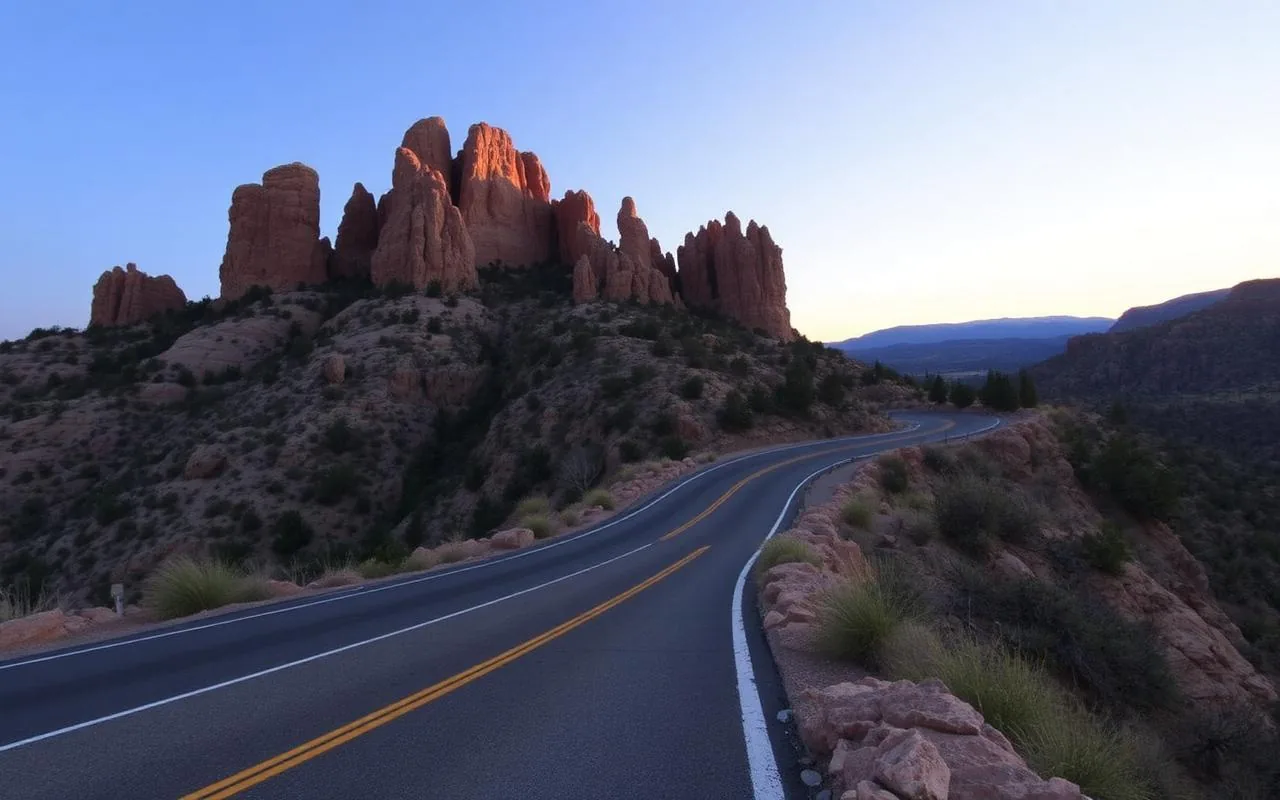
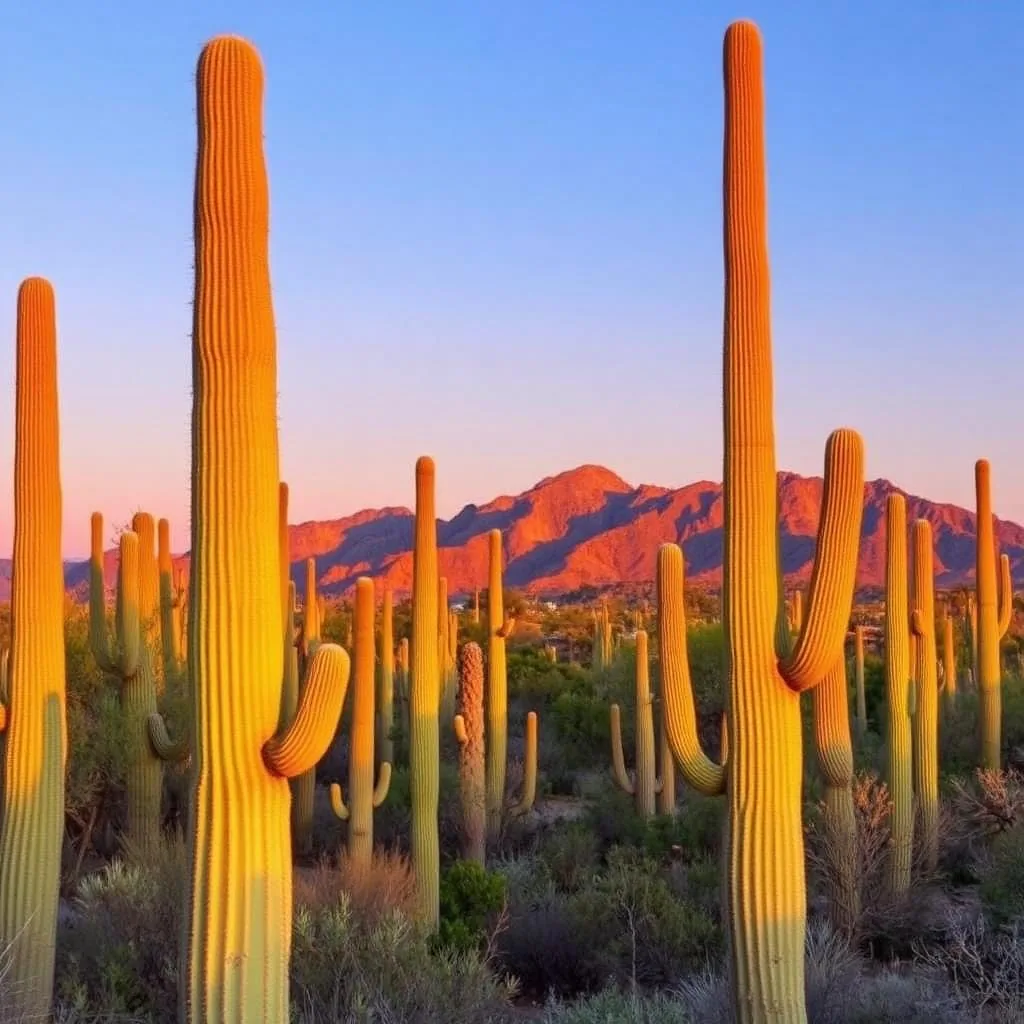
Saguaro National Park is the only U.S. national park named after a single plant species, and standing in the middle of either of its two districts you understand exactly why. Hundreds of 30-foot-tall saguaros — some over 150 years old — stretch in every direction. It's the most distinctly American Southwest landscape there is.
What most first-time visitors don't realize is that the park has two completely separate districts on opposite sides of Tucson, each a 30 to 45 minute drive from the other. You can absolutely do both in one day if you're determined, but you really don't need to.
Saguaro West (Tucson Mountain District): denser cactus, better scenic drive
The western district sits in the Tucson Mountains, with the famously photogenic Bajada Loop Drive — a 6-mile graded gravel road that winds through what is probably the densest saguaro forest in the country. It's slow, dusty, and worth it. There's a small visitor center, several short interpretive trails, and the Signal Hill petroglyph site, which is one of the easiest petroglyph viewings in southern Arizona.
Saguaro West is the choice if you're coming from downtown Tucson, want the most cactus per minute of effort, or are pairing the visit with the Arizona-Sonora Desert Museum (just minutes away — and a museum I'd recommend to anyone visiting the region).
Saguaro East (Rincon Mountain District): bigger park, longer drive
The eastern district is much larger, includes a paved 8-mile scenic loop (Cactus Forest Drive), and backs up against the Rincon Mountains, which top out over 8,000 feet — meaning the park transitions from saguaro forest at the bottom to pine forest at the top if you hike up. Most visitors don't get that far, but the paved loop alone is a great drive and is more accessible than the dusty gravel of Bajada Loop.
Saguaro East is the better choice if you're staying on the east side of Tucson, want a paved drive, or plan to do a longer hike (the Tanque Verde Ridge Trail starts here).
A realistic half-day plan
Pick one district. Arrive at the visitor center within 30 minutes of opening (the parks open at sunrise; visitor centers open at 9 AM). Drive the scenic loop slowly with several stops. Walk at least one short trail (Valley View Overlook in the West, Freeman Homestead in the East). Plan to be out of the park before noon in summer — the saguaros do not care that you didn't bring enough water, and the temperatures by midday are genuinely dangerous.
- 1.5 to 2 hours for the scenic drive with stops
- 30 to 60 minutes for a short interpretive trail
- Visitor center for the film and a quick exhibit walk
- Bring at least one liter of water per person
When to visit
October through April is comfortable. Saguaro blooms peak in late May through early June — the white flowers open at night and stay open the following morning, so plan early starts in bloom season. Avoid mid-day visits in June through September; ground temperatures in full sun can exceed 140°F.
Frequently asked questions
Saguaro East or West — which is better?
West has the more iconic cactus density and the famous Bajada Loop scenic drive. East is larger and offers a paved scenic drive and more substantial hikes. For a first visit, West is the easier yes.
Is Saguaro National Park free?
No. There is an entrance fee (~$25/vehicle, valid for 7 days at both districts) or you can use a federal lands pass.
How long does it take to visit Saguaro National Park?
A focused visit to one district takes 3 to 4 hours including a scenic drive and a short hike. Both districts in one day is doable but rushed.