Camelback Mountain rises 1,400 feet straight out of the middle of Phoenix and looks, from a distance, like a friendly little urban hike. It is not. It is one of the most strenuous summit hikes of its length in any American city, and Phoenix Fire pulls people off of it almost every weekend between April and October.
This guide is for the person who wants to hike Camelback well — not the one who wants to know whether they should. (If you're asking, the answer is: in winter, yes; in summer, almost never.) We'll cover both trails, parking, gear, timing, and the small choices that make the difference between a great morning and a heatstroke evacuation.
Echo Canyon vs. Cholla — which trail?
Camelback has two summit trails and they are not equivalent. Echo Canyon (1.2 miles, 1,264 ft gain) is the steeper, rockier, more technical side. Cholla Trail (1.4 miles, 1,300 ft gain) is the longer, more exposed, more gradual side. Echo feels like scrambling up a steep staircase made of boulders. Cholla feels like a long ridge walk that turns into a scramble in the last half mile.
If you have any climbing experience and want the dramatic route, take Echo. If you'd rather not use your hands until you have to, take Cholla. Either way, the last quarter mile is hands-and-feet scrambling on slick polished rock — there is no easy way up Camelback.
Parking is the actual hard part
Echo Canyon's lot fits about 130 cars and fills before sunrise on weekends from October through April. There is no overflow parking and you cannot park on the surrounding streets — they're posted and ticketed. Cholla Trail has even less parking (street-only along Invergordon Road, posted hours). Plan to arrive at least 30 minutes before sunrise, or wait until the lot turns over around 9–10 AM.
What to bring
More water than you think. The rule of thumb locals use is one liter per person for a winter hike, two liters in spring/fall, and don't hike it in summer. Wear actual trail shoes with grippy soles — the rock on both trails is polished smooth by millions of footsteps and trail runners with worn tread slip on the descent. Bring a real headlamp if you're starting before dawn; phone flashlights die when you need them most.
- Trail shoes with grippy tread (no running shoes)
- 1–2 liters of water per person
- Electrolyte tablets or salty snack
- Headlamp if starting before sunrise
- Phone with full battery (for emergencies)
When to hike — and when not to
October to April: ideal. Sunrise hikes are cool, beautiful, and crowded but manageable. May and September: only at first light, and turn around if you're slower than expected. June through August: Phoenix Fire and Mountain Rescue strongly advise against it. The summit hits 110°F+ before noon, there's no shade, and helicopter rescues from Camelback cost the city six figures a year.
What the summit is actually like
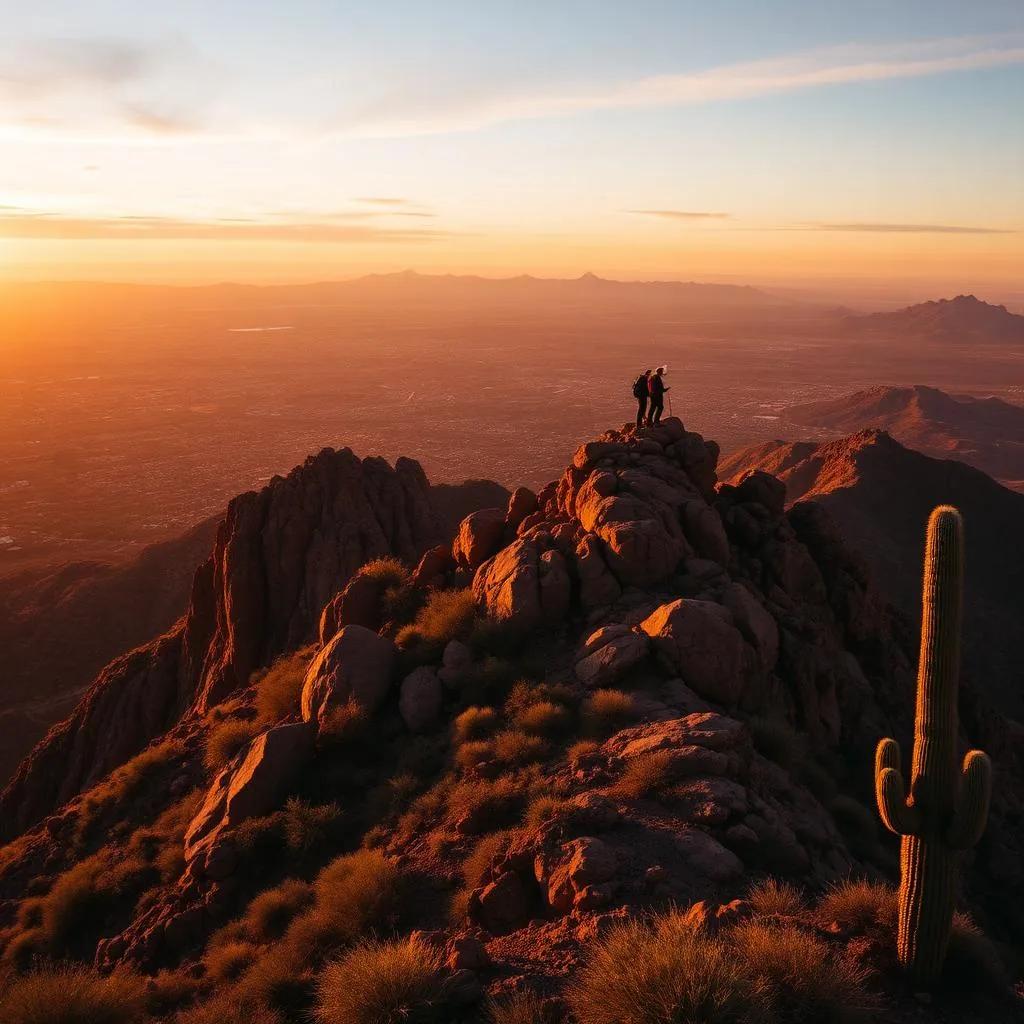
The summit is a flat-ish slab of rock about the size of a basketball court, with 360-degree views: downtown Phoenix to the west, the Superstitions to the east, the McDowells to the north, South Mountain to the south. On a clear winter morning you can see roughly 80 miles. There is no shade, no bench, no facility. Sit on the rock, eat your snack, take your photos, and start back down before the day warms up.
Frequently asked questions
How hard is Camelback Mountain?
Both trails are rated extremely difficult — short but steep, technical, and exposed. Most fit hikers take 2.5 to 3.5 hours round trip.
Which trail is easier, Echo Canyon or Cholla?
Neither is easy. Cholla is more gradual and less technical for most of its length, but the final scramble is similar on both trails.
Can beginners hike Camelback?
Not as a first hike. Build up to it with easier Phoenix-area trails like Piestewa Peak or the South Mountain National Trail first.