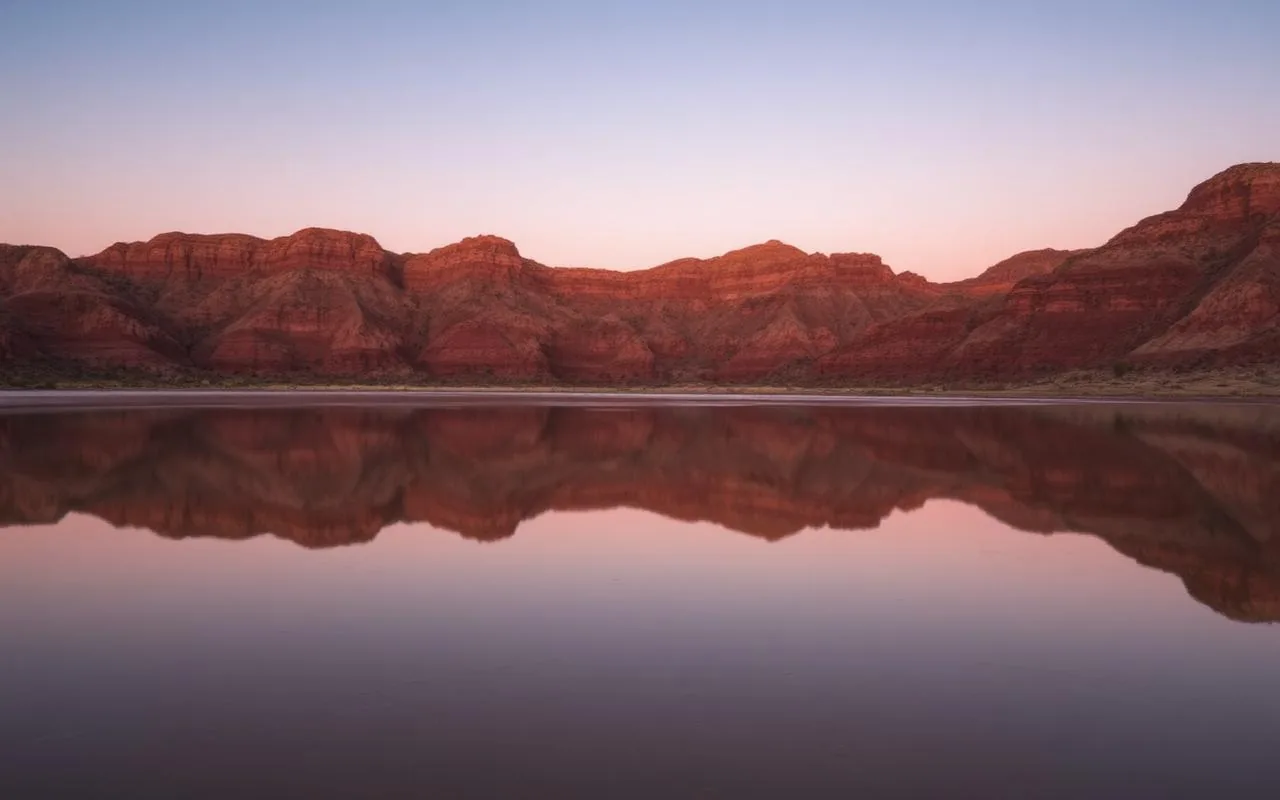
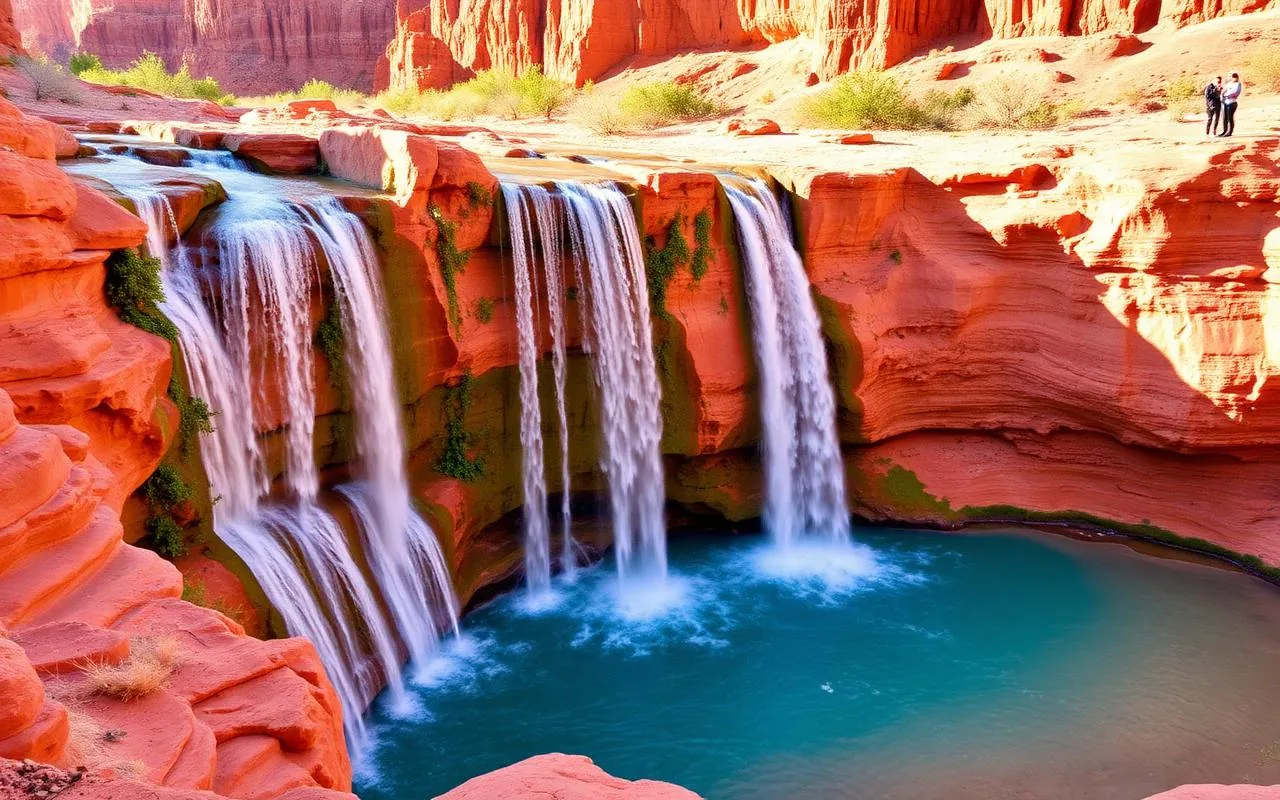
Let me say this up front because the Instagram aesthetic has confused a lot of people: Havasu Falls is not a day trip. It is not an easy overnight. It is a 10-mile hike into the Grand Canyon's western drainage, on a Native American reservation, with a permit system that sells out within minutes of release each February, and a mandatory minimum 3-night stay.
It is also one of the most unambiguously magical places I have ever been. The water really is that shade of turquoise — it gets its color from dissolved calcium carbonate in the spring water, and on a sunny day it glows almost neon against the red Supai sandstone. The first time I came around the corner of the trail and saw Havasu Falls itself, I started laughing out loud in a slightly unhinged way. It is that good.
But this trip rewards preparation and punishes improvisation. I've done it twice — once well-prepared and once underprepared — and the difference is enormous. Here's the honest, no-marketing-fluff guide to what's actually involved.
The permit system: how it actually works
Permits are issued exclusively by the Havasupai Tribe through havasupaireservations.com. The exact release date moves slightly year to year (recently it has been February 1 at 8 AM Arizona time), and the entire season — typically February through November — sells out within a few hours.
The system only sells 3-night/4-day campsite reservations. You cannot book a 1-night, you cannot book a 2-night, and you cannot show up without a permit. Pricing has climbed steadily; budget roughly $400–$500 per person for the campsite trip, plus pack mule fees if you use one. There is also a separate small Havasupai Lodge with a different reservation process if you don't want to camp.
Permits are non-transferable and your name on a government ID must match the booking when you check in at Supai village. Resale is prohibited and the tribe checks. Don't try to buy a permit on Facebook; you'll be turned around at Hualapai Hilltop after driving five hours.
On release day, log in 30 minutes early, have your payment information saved, and pick alternate dates. The system queues people; expect to wait. People who succeed treat it like a Taylor Swift ticket drop — multiple devices, multiple browsers, a clear-headed plan for which dates to grab.
The drive and the hike in
The trailhead is at Hualapai Hilltop, about 4 hours northwest of Flagstaff via Route 66 and Indian Route 18. The last 60 miles are remote — no gas, no cell service, no services of any kind. Fill your tank in Peach Springs or Seligman. The hilltop has a paved parking lot, basic bathrooms, and nothing else.
From the parking lot, you descend roughly 2,000 feet in the first 1.5 miles of switchbacks. This part is dramatic but manageable in the morning cool. After that, the trail flattens into a sandy wash for 6.5 miles to Supai village, then 2 more miles down past Havasu Falls to the campground. Total: about 10 miles, mostly downhill.
The catch is that 'downhill' going in means 'uphill' going out, in heat, with a full pack. The hike out is genuinely hard, and the switchbacks at the end are demoralizing in the afternoon sun. Start your hike out by 5 AM. I cannot stress this enough. People who start at 8 AM in summer have suffered, sometimes seriously.
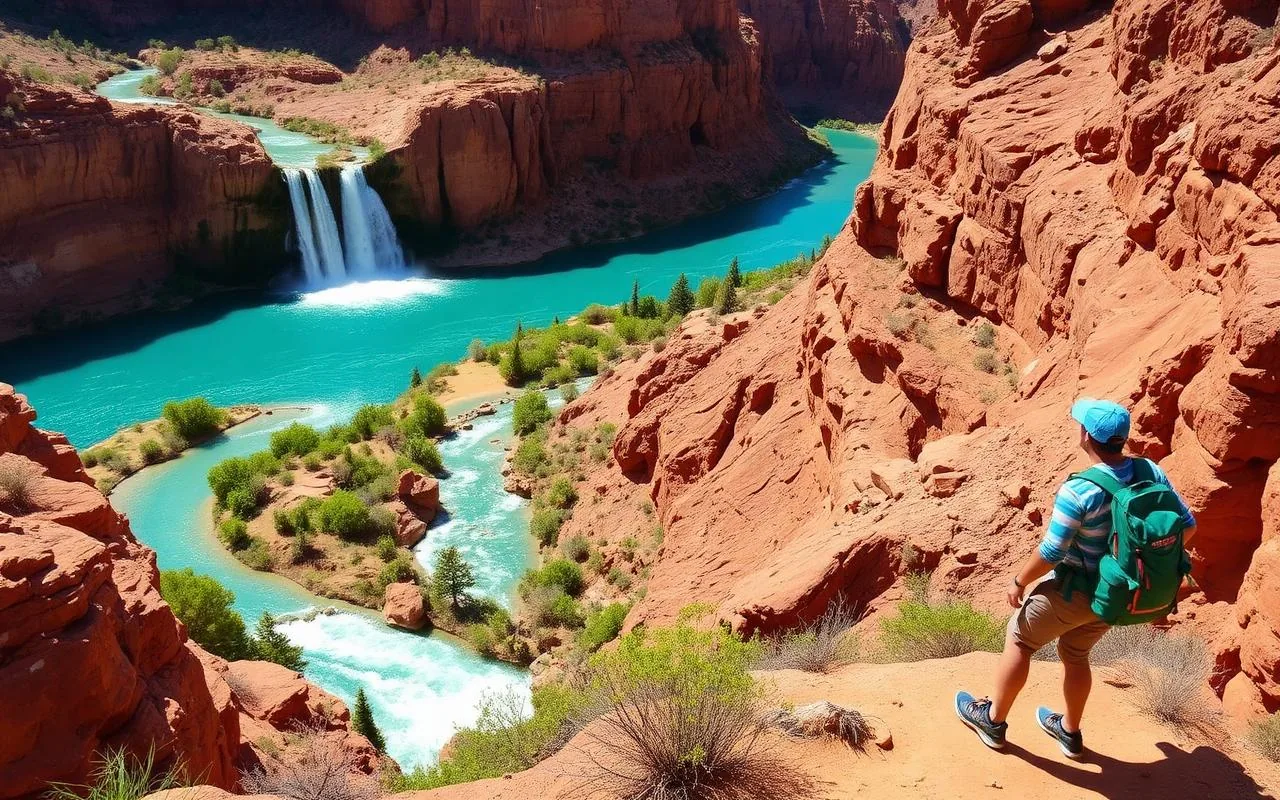
What to pack (lightweight backpacking essentials)
Every ounce in your pack you carry 20 miles round trip. Be ruthless. The trip rewards minimalist backpackers and punishes people who bring 'just in case' gear.
Essentials: a backpacking tent or hammock with bug net (the ground squirrels and the gnats are both real problems), a water filter (Sawyer Squeeze is standard), a sleeping pad and warm-enough bag for spring desert nights (40°F lows are common in April), water shoes for the creek crossings (you will cross the creek dozens of times), a headlamp, sun protection, and small-bill cash for the village.
The food question is harder. There's a small store and a fry-bread cafe in Supai village, but the prices are high and selection is limited. Most experienced hikers bring all their food. Dehydrated backpacker meals are the standard. Bring more snacks than you think you need — the heat suppresses appetite during the day, which catches up with you at night.
Critical detail: the campground ground squirrels will chew through any soft fabric to get at food. Hang everything from the wire systems provided, or use an Ursack. People lose entire food bags every season to squirrels who treat backpacks like vending machines.
The waterfalls (yes, plural — and the campground hierarchy)
Havasu Falls is the famous one, the postcard shot, and it does live up to the hype. It's also the most crowded swimming pool in the canyon. If you want it without crowds, swim at sunrise.
But the secret of the trip is that Havasu isn't even the best waterfall. Mooney Falls, just below the campground, is taller and more dramatic — and reaching its base requires descending a vertical cliff via chains and wooden ladders bolted into the rock. It's not for everyone, but if you're comfortable with heights it's genuinely the most thrilling 15 minutes of the trip.
Below Mooney, 3 miles further down the canyon, is Beaver Falls — a series of tiered terraces with the most swim-able water on the route. Almost nobody goes this far. It is my single favorite spot in the canyon, and one of the great rewards of the trip.
Is it actually worth the effort?
Honestly, yes. If you have any backpacking experience and a flexible enough work life to plan around a permit lottery, this is one of the best trips in the American Southwest. The combination of the canyon, the water color, the cultural setting on Havasupai land, and the genuine effort required to get there makes it feel earned in a way that easier destinations don't.
If you can't get a permit or aren't sure you're up for it, the right move is to wait. The trip does not work as a 'we'll wing it' adventure. But if you commit to the prep, train for the hike, and get realistic about what you're packing, it will be one of the trips you talk about for years.
Frequently asked questions
Can you do Havasu Falls as a day trip?
No. The Havasupai Tribe requires a minimum 3-night stay, and the hike is too long for a single day in any case. Day hiking is not permitted.
How hard is the Havasu Falls hike?
Strenuous. 10 miles each way with a 2,000-foot elevation change and full backpacks. People with no backpacking experience have done it, but training (loaded hikes, hot weather conditioning) is strongly recommended.
Can you helicopter in to Havasu Falls?
Yes — a tribal-run helicopter operates between Hualapai Hilltop and Supai village a few days a week, seasonally, on a first-come basis with no advance reservations. Many people hike in and helicopter out, but it's not guaranteed and bad weather grounds it.
What's the best time of year to go?
April–May and September–October are sweet spots: warm-enough water, cool-enough air. June through August is brutally hot in the canyon. Winter trips happen but water is too cold for swimming.