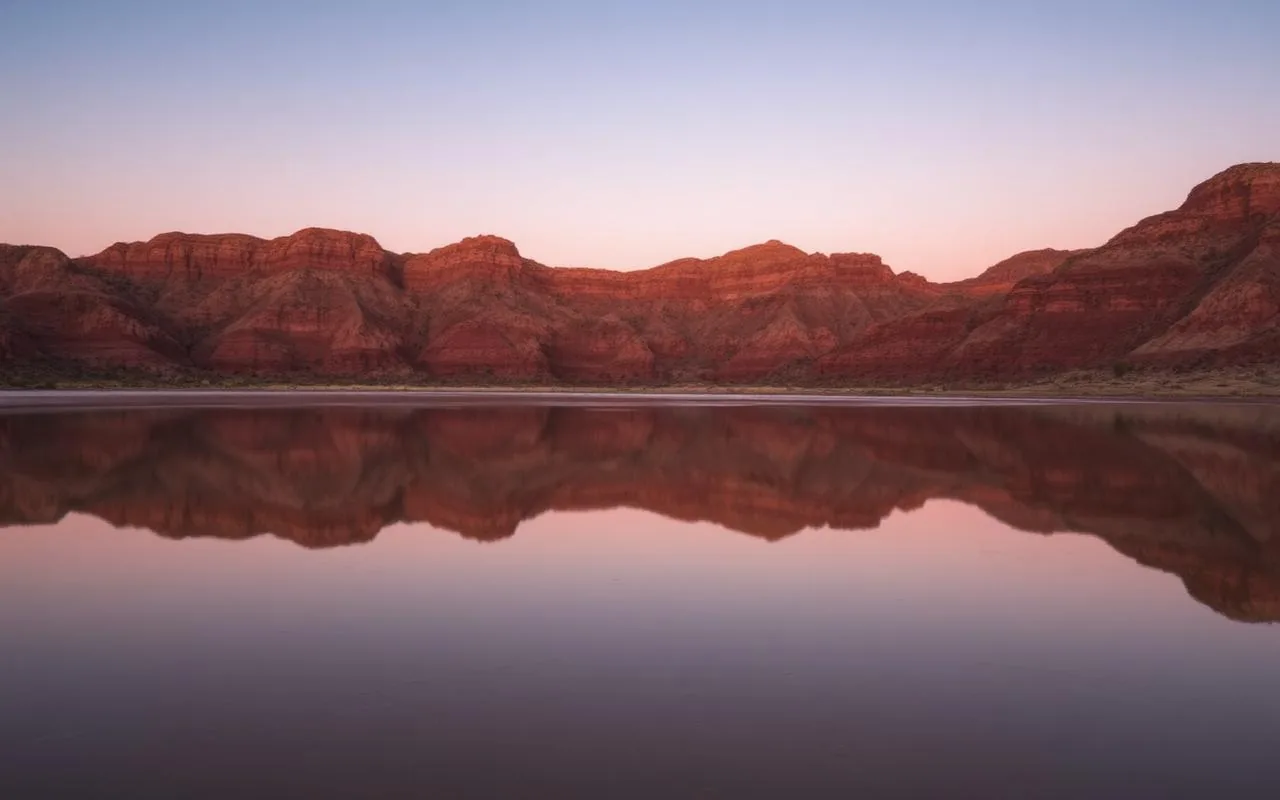
There's a different Arizona behind the Antelope Canyon photos and the Sedona vortex queues. It's quieter, less marked, sometimes a little harder to get to — and it's where I've had most of my favorite travel moments in the state. The first time I stood at the rim of Toroweap with my boots six inches from a 3,000-foot drop into the Grand Canyon, I had the place entirely to myself for two hours on a Saturday morning in October. That doesn't happen at the South Rim.
Below are 20 hidden gems organized roughly by region, each with one honest line about what you'll actually find there. Some require a permit, some require a high-clearance vehicle and a tank of confidence, and a handful are very easy to reach but somehow stay off the tourist radar. All of them are worth your time, and most are best visited on a weekday in the shoulder seasons (March-April or October-November) when Arizona is at its best.
Northern Arizona hidden gems
1. Toroweap Overlook (Grand Canyon North Rim). A 3,000-foot vertical drop straight into the Colorado, with no railing and no crowds. Cost: $35/vehicle Grand Canyon entrance, free camping at the primitive campground (no water, no reservations, first-come). Best season: mid-May through mid-October — the last 60 miles are ungraded dirt and impassable when wet. Safety: high-clearance 4x4 only, two full-size spares, and never trust Google Maps here. Call the NPS backcountry office (928-608-6200) for current road conditions the morning you leave. There is no cell signal for 90 miles.
2. Crystal Forest, Petrified Forest National Park. Most people photograph the Painted Desert from the north entrance and skip the actual petrified logs. Cost: $25/vehicle, 7-day pass. Best season: March–May and October–November; summer highs hit 100°F with zero shade. The 0.75-mile loop through Crystal Forest has the densest concentration of intact logs in the park, and I've walked it in August at 9 AM completely alone.
3. White Pocket, Vermilion Cliffs. Sandstone swirls that rival The Wave, with no permit required. Cost: free. Best season: October–April; the deep sand approach can bake tires in summer. Safety: this is the single hardest hidden gem to reach in Arizona. You need a full-size 4x4 with aired-down tires, a shovel, a tow strap, and preferably a second vehicle. If you have never driven deep sand, book a guided tour from Kanab (~$200/person) instead — recovery here starts at $1,500.
4. Wupatki National Monument, north of Flagstaff. 800-year-old red sandstone pueblos with a real ball court and a natural blowhole. Cost: $25/vehicle (also covers Sunset Crater). Best season: year-round; summer mornings are fine, winter afternoons are gorgeous. The paved loop trail around Wupatki Pueblo is stroller-friendly. Etiquette matters: don't climb the walls, don't pocket sherds. Rangers do watch.
5. Vermilion Cliffs condor release site (mile marker 557 on US-89A). Free roadside pullout where California condors — down to 22 birds in 1987, now 500+ — ride the thermals along the cliff face. Best season: October–May; the birds roost lower in cooler weather. Bring binoculars and patience. I've had 45-minute waits and I've had five condors overhead in ten minutes.
Central Arizona hidden gems
6. Tonto Natural Bridge State Park (Payson). The world's largest travertine bridge, in a state park most out-of-state visitors have never heard of. Cost: $7/adult, $4/child 7–13. Best season: April, May, September, October — the park closes when the access road is icy, and summer weekends fill by 10 AM. All four trails to the bridge floor are steep and slick; wear grippy shoes, not flip-flops. The Pine Creek Trail has the best angle for photos and the coldest water for wading.
7. Verde Hot Springs (near Camp Verde). A hike-in series of natural pools along the Verde River. Cost: free. Best season: October–April; summer is buggy and the drive is worse. Safety: the road from Camp Verde to Childs is 20+ miles of rough dirt that eats stock SUVs, and the trail crosses the Verde River twice at knee depth. Never attempt after monsoon rain — the river swells fast. It's clothing-optional; bring your own sanity check.
8. Salome Jug (Tonto National Forest). A slot-canyon hike with mandatory swims and two short downclimbs. Cost: free. Best season: May–September only (you're in cold water most of the day). Safety: NEVER enter if there is rain in the forecast anywhere in the watershed — this is a genuine flash-flood slot. Bring a dry bag, water shoes with real grip, and go with someone who's done it. Solo is not smart here.
9. Goldfield Ghost Town (Apache Junction). A working ghost town that's more legit than it looks. Cost: free to enter; $10 mine tour, $10 narrow-gauge railroad, gunfight shows free on weekends. Best season: October–April; the town sits at 2,000 ft and bakes in summer. Skip the tourist-trap sarsaparilla and pay for the underground mine tour — the guide is a retired copper miner and the shaft is genuinely 100+ years old.
10. Fossil Creek. Turquoise spring-fed creek flowing year-round at 72°F. Cost: $10 parking permit April 1–Oct 1, reserved on recreation.gov (releases open 4 weeks ahead and sell out in minutes for weekends). Best season: technically summer, but the permit season is exactly when demand is worst — I go in mid-October when permits are easier and the water is still warm enough. Safety: the road from Strawberry is closed to vehicles; you're hiking 4 miles in and 4 miles out with a serious elevation gain on the return. Carry 3+ liters of water per person.
Southern Arizona hidden gems
11. Aravaipa Canyon Wilderness. Permit-required wilderness with a year-round creek and hard-capped visitor numbers. Cost: $5/person/day, permits released 13 weeks in advance on recreation.gov (weekends gone in seconds). Best season: October–November and March–April; summer flash floods close it repeatedly. Safety: you WILL be wading — plan for wet feet all day, and bring dry socks in a dry bag. This is my personal pick for the most underrated place in Arizona.
12. Chiricahua National Monument. "The wonderland of rocks" — a forest of welded-tuff hoodoos in Arizona's far southeast corner. Cost: free entrance. Best season: April–May, September–October; summer thunderstorms close the scenic drive, winter closes the upper trails with ice. The Echo Canyon–Hailstone–Ed Riggs loop (3.3 miles, 500 ft) is the single best hike in Arizona for hoodoo photography. Get there by 9 AM to snag a spot on the Massai Point shuttle.
13. Coronado National Memorial. The southernmost view in Arizona, looking directly into Sonora. Cost: free. Best season: October–April; the mountain gets hot in summer. The 0.75-mile Coronado Cave trail requires a free permit at the visitor center and two flashlights — not phones, real flashlights — per person. The cave is undeveloped, unlit, and quiet.
14. Kartchner Caverns State Park (Benson). One of the best living cave systems in North America, kept humid and pristine. Cost: $7/vehicle park entry plus $23/adult Rotunda tour or $23/adult Big Room tour (Big Room closed mid-April to mid-October when bats are nesting). Best season: November–March for the Big Room. Book tours 6+ weeks ahead on the AZ State Parks site — they sell out. No cameras allowed inside, ever.
15. Patagonia Lake State Park. A quiet birding lake in southern Arizona wine country. Cost: $20/vehicle weekends, $15 weekdays. Best season: October–April; summer is hot and buggy. Rent a kayak at the marina (~$15/hour), paddle the narrows toward the birding trail, and you'll routinely see vermilion flycatchers and elegant trogons. The lake beach is deserted on weekdays.
16. Cochise Stronghold (Dragoon Mountains). Granite fortress used by the Apache chief Cochise as a base for over a decade. Cost: $10 day-use, $20 camping. Best season: October–April. The 4.6-mile Stronghold Divide Trail (900 ft gain) climbs to a saddle with 360° views. There is no cell service and no water on the trail — carry 2 liters per person minimum.
Western Arizona hidden gems
17. Alamo Lake State Park. Best stargazing in Arizona, period — a Dark Sky Park three hours from the nearest city glow. Cost: $10/vehicle day use, $30–35/night for cabins (book 3+ months out for new moon weekends). Best season: October–April. Bring red-light headlamps, warm layers even in shoulder season (desert nights hit the 30s), and expect burros in your campsite at dawn. Cell service is nonexistent — download offline maps before Wickenburg.
18. Joshua Forest Parkway (US-93 between Wickenburg and Wickieup). An accidental Joshua tree grove along a state highway. Cost: free. Best season: February–March for wildflowers, October–November for comfortable stops. There are no facilities and no marked pullouts — use the wide shoulders and mind traffic. The best density is roughly milepost 137–162.
19. Quartzsite winter rock-hounding scene. January and early February only. Cost: free wandering; individual show fees $0–5. Best season: peak is the Quartzsite Sports, Vacation & RV Show (mid-January) and the Tyson Wells Rock & Gem Show (late Jan). A town of 3,000 balloons to over a million RVers and rockhounds. Bring cash, sun protection, and low expectations for parking. It's genuinely one of the strangest things in Arizona.
20. Burro Creek Crossing (US-93, milepost 141). Wild burros at a quiet desert river with a free BLM campground and a real swimming hole. Cost: $12/night camping, day use free. Best season: October–May; summer highs are brutal at 1,900 ft. Check for flash-flood advisories before dropping into the creek — the drainage is huge and drains fast.
First-time visitor checklist
After a decade of driving myself into (and once out of) trouble on Arizona back roads, this is the short list I run through before every hidden-gem trip. None of it is optional if you're going more than 30 minutes from pavement.
- Download offline maps in both Google Maps AND Gaia GPS (or CalTopo). Google routinely fails on the Arizona Strip.
- Check az511.gov for road closures AND call the relevant NPS/BLM office the morning of departure for dirt-road conditions.
- Carry at least 1 gallon of water per person per day, plus a spare gallon for the vehicle.
- Full tank of gas before you leave the last real town — Wickenburg, Payson, Willcox, Kanab. Prices in-canyon are 30–80% higher when pumps exist at all.
- Two spares if you're going to Toroweap, White Pocket, or Aravaipa. One spare gets flat, then what?
- Real paper map as a backup, a headlamp with fresh batteries, and enough snacks to last an unplanned overnight.
- Tell someone your route and expected return time. Cell service is a myth in half the places on this list.
What I no longer recommend as a "hidden gem"
A few places I've quietly pulled from this list over the last two years. Havasu Falls is unreachable for the near future after the 2024 flooding and permit changes — I don't send readers there right now. The Wave permits are so oversubscribed (~4% success rate) that recommending it as a hidden gem is dishonest. Antelope Canyon and Horseshoe Bend passed the tipping point from hidden to overrun a decade ago and belong on a Page mainstream itinerary, not here. And Salt River tubing is fun but is decisively a Phoenix summer ritual, not a secret.
The gems above hold up because they self-limit through permits, distance, or difficulty. Please respect the closures and the visitor caps — that's the entire reason these places are still worth writing about.
Frequently asked questions
What is the most underrated place in Arizona?
For me, it's Aravaipa Canyon. It's a permit-controlled wilderness with a year-round creek, towering canyon walls, and almost no crowds because of the strict visitor cap. The permits open 13 weeks ahead and the weekend dates go fast.
Do you need a 4x4 for these hidden gems?
Most are reachable in a normal SUV with decent ground clearance. White Pocket, Toroweap, Verde Hot Springs, and Salome Jug specifically require high-clearance 4x4 and route-finding experience — don't attempt them in a sedan.
When is the best time to visit hidden gems in Arizona?
March through April and October through November. Spring brings wildflowers, fall brings comfortable temperatures and the aspen color in the White Mountains. Summer is brutal below 5,000 ft and winter closes some of the dirt-road access.
Are these hidden gems family-friendly?
Some are, some aren't. Tonto Natural Bridge, Kartchner Caverns, Chiricahua, Wupatki, and Patagonia Lake are all great with kids. Toroweap, Salome Jug, and Aravaipa are best for older kids or adults given the remoteness or technical sections.