The first time my husband and I drove down to Tonto Natural Bridge, I genuinely thought our GPS was broken. The access road drops so steeply off AZ-87 that it feels like you're heading into someone's private property, not a state park. Then the trees open up, the parking lot appears, and somewhere below your feet there's a 183-foot arch of travertine you can't quite see yet.
I've lived in Arizona long enough to take a lot of our scenery for granted, but the moment I walked down the Pine Creek Trail and stood underneath that arch — looking up at a cathedral ceiling of mineralized stone with a creek running through it — I had to sit down for a minute. Photos really do not do this place justice. Most of the people I've sent here have texted me later saying the same thing.
This is a small park, but it rewards a thoughtful visit. The four short trails each show you something completely different, the travertine is genuinely slippery in a way that catches first-timers off guard, and the surrounding pine country (Pine and Strawberry are minutes away) makes it easy to turn a quick stop into a full, satisfying day. Here's everything I wish I'd known the first time.
Getting there (and why the drive matters)
Tonto Natural Bridge State Park sits about 10 miles north of Payson on AZ-87, which puts it roughly 90 minutes from north Phoenix and around two hours from Scottsdale. The turn-off is well signed, but once you make it, the access road drops about 500 feet in a series of tight switchbacks. It is paved, but the grade is steep enough that the state explicitly bans RVs, trailers, and vehicles longer than 24 feet. I've watched a few people back up nervously into the pull-outs to let oncoming traffic pass — if you're driving a big SUV with a trailer, leave it in Payson.
I always treat this drive as part of the experience. Roll the windows down, downshift, and let your passengers crane their necks. You're descending from the Mogollon Rim country into a microclimate canyon that's noticeably cooler and greener than the highway above. By the time you reach the entrance booth, you've already left the regular world.
On busy weekends (especially in October when the cottonwoods turn and in any cool weekend between March and May), the small lot fills up by late morning. We've learned to arrive before 10 AM or after 2 PM. The park has occasionally closed entry temporarily when the lot is full, which can ruin a long drive if you don't plan ahead.
The four trails: which one to actually do
There are four trails in the park, and all of them are short — none more than a mile round trip. But the difficulty range is wider than most visitors expect, and the marketing photos make everything look gentler than it is. Here's the honest breakdown after doing each of them more than once.
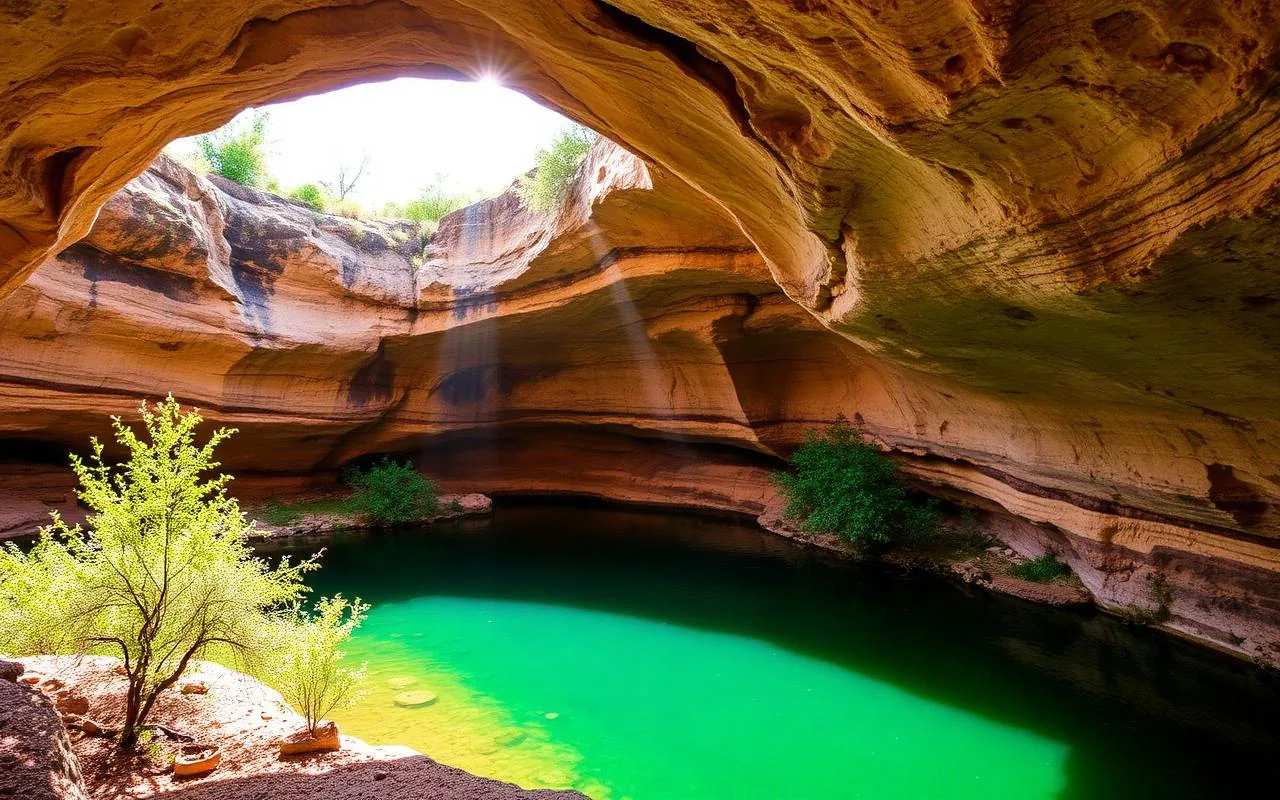
The Pine Creek Trail is the marquee experience and the only one that actually puts you under the arch. It's a steep descent into the canyon with a wood staircase that eventually gives way to bare travertine. The last hundred feet or so is genuine rock scrambling — you're stepping on uneven, often-wet stone with no railings. The reward is unbelievable: standing inside the bridge looking up at light pouring through the openings, with a turquoise pool reflecting everything. If you're reasonably mobile and willing to use your hands, do not skip this trail.
The Gowan Trail takes a gentler grade to a viewing deck near the creek and is the best compromise for someone who wants to feel the canyon without the scramble. The Anna Mae Trail is a 5-minute walk to an overlook above the bridge — perfect for grandparents, toddlers, or anyone short on time. Finally, the Waterfall Trail visits a small side cascade and ends at a viewing alcove behind a curtain of falling water. It's the shortest, and I think the most magical with kids.
What to wear (and why your sneakers won't cut it)
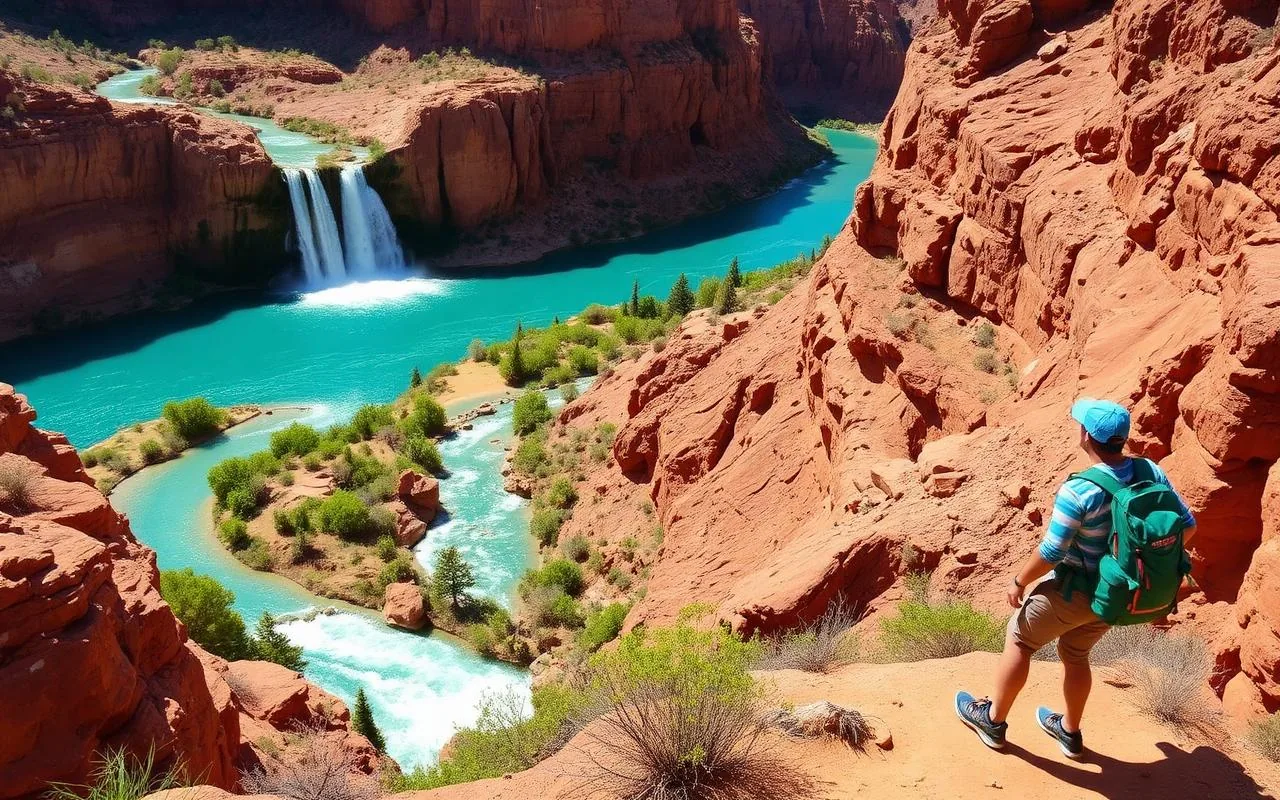
The single thing I tell every friend before they visit: wet travertine is one of the most slippery surfaces in nature. It's not like a wet rock — it's like a wet ice rink with sharp edges. I have personally watched a confident-looking guy in fashion sneakers go down hard on the Pine Creek Trail and limp back to his car. The park sees an ankle sprain almost every weekend in summer.
Real hiking shoes or trail runners with aggressive lugs are the move. If you only own road sneakers, the Anna Mae overlook is fine, but I'd skip Pine Creek. Trekking poles are surprisingly helpful on the descent, especially in fall when cottonwood leaves carpet the wet stone. And dress in layers — the canyon floor can be a full 15°F cooler than the rim, especially in the morning before the sun finds its way in.
Photography tips from someone who has tried (and failed)
Light inside the bridge is tricky. Midday creates the famous beam-of-light effect through the openings, but the rest of the scene blows out. Late morning (around 10–11 AM in summer, 11–12 in winter) gives you the best balance of glow and shadow detail. A phone in HDR mode handles it surprisingly well; a real camera benefits from bracketing exposures.
For the wider 'arch from above' shot you've probably seen on Instagram, the overlook on the Anna Mae Trail is the spot. Get there early or wait out the crowds — there's really only one good railing position, and on weekends there's a quiet queue.
Combining it with Pine, Strawberry, and Payson
Honestly, the bridge is only a 2–3 hour visit if you do all four trails. I never recommend it as a stand-alone day trip. The tiny towns of Pine and Strawberry are 6 and 9 miles further up AZ-87 and are perfect for lunch. The Strawberry Schoolhouse (Arizona's oldest standing one-room school) is a fun 15-minute stop, and That Brewery in Pine has a patio I'd happily sit on for two hours.
If you have more time, you can loop back to Phoenix the long way via Roosevelt Lake and the AZ-188 corridor — that adds about 90 minutes but takes you through landscape that almost no Phoenix tourists ever see. We've done it as a slow Sunday driving day and I'd recommend it to anyone who likes scenic backroads more than highway miles.
Practical logistics: fees, hours, and the things nobody mentions
Entry is a per-vehicle fee (currently $7) and pets are welcome on a leash, though you'll want to think hard about whether your dog can handle the travertine scramble — most can't. Restrooms are at the visitor center only, so use them before you start hiking. There's a small gift shop with snacks and water but no real food on-site.
The park closes earlier than most visitors expect — typically 5 PM in winter and 6 PM in summer — and the gates are locked, not just suggested-closed. I've seen rangers politely but firmly herd stragglers up the trail at closing. Allow yourself a full hour of buffer if you want to do Pine Creek, and don't start a new trail less than 90 minutes before closing.
Finally, check the AZ State Parks website before driving up in winter or after a heavy monsoon. The access road occasionally closes for ice or for trail damage, and there is genuinely no way to confirm conditions from the highway turn-off. Two hours in the car to find a closed gate is a particular kind of regret I'd like to spare you.
Frequently asked questions
How long does it take to visit Tonto Natural Bridge?
Allow 2–3 hours including all four trails. An overlook-only visit can be done in 45 minutes, but you'll regret not going underneath. A full day is easy if you add lunch in Pine and a stop in Payson.
Is Tonto Natural Bridge open year-round?
Yes, but the access road can be hazardous after winter storms or summer monsoons. The state occasionally closes the road for ice or trail damage — always check the AZ State Parks website before driving from out of town.
Can kids visit Tonto Natural Bridge?
Absolutely. The Anna Mae and Waterfall trails are great for young kids. Pine Creek is more appropriate for kids over about eight who are sure-footed, and an adult should be hands-on through the scramble.
Are dogs allowed at Tonto Natural Bridge?
Leashed dogs are allowed in the park, but the travertine scramble is rough on paws and most dogs struggle with it. Stick to the upper overlooks if you bring your pup.