I have made the I-40 drive between Flagstaff and Albuquerque more times than I can count, and I drove past the brown sign for Walnut Canyon National Monument for years before I finally took the exit. I always assumed it was a roadside overlook, a quick photo, maybe a museum. Reader, it is not. It is one of the best 90-minute experiences in northern Arizona, and almost nobody on that highway is stopping for it.
Walnut Canyon sits ten minutes east of Flagstaff, signed clearly from I-40 at Exit 204. Most people zoom past on their way to the Grand Canyon, which is what I did, repeatedly. They are missing the experience of descending 240 stairs into a limestone canyon and walking a 0.9-mile loop trail that passes 25 individual Sinagua cliff dwellings — many of which you can step inside, lean against the original walls, and look out at the same view someone living there saw in 1200 CE.
The Island Trail — the headline experience
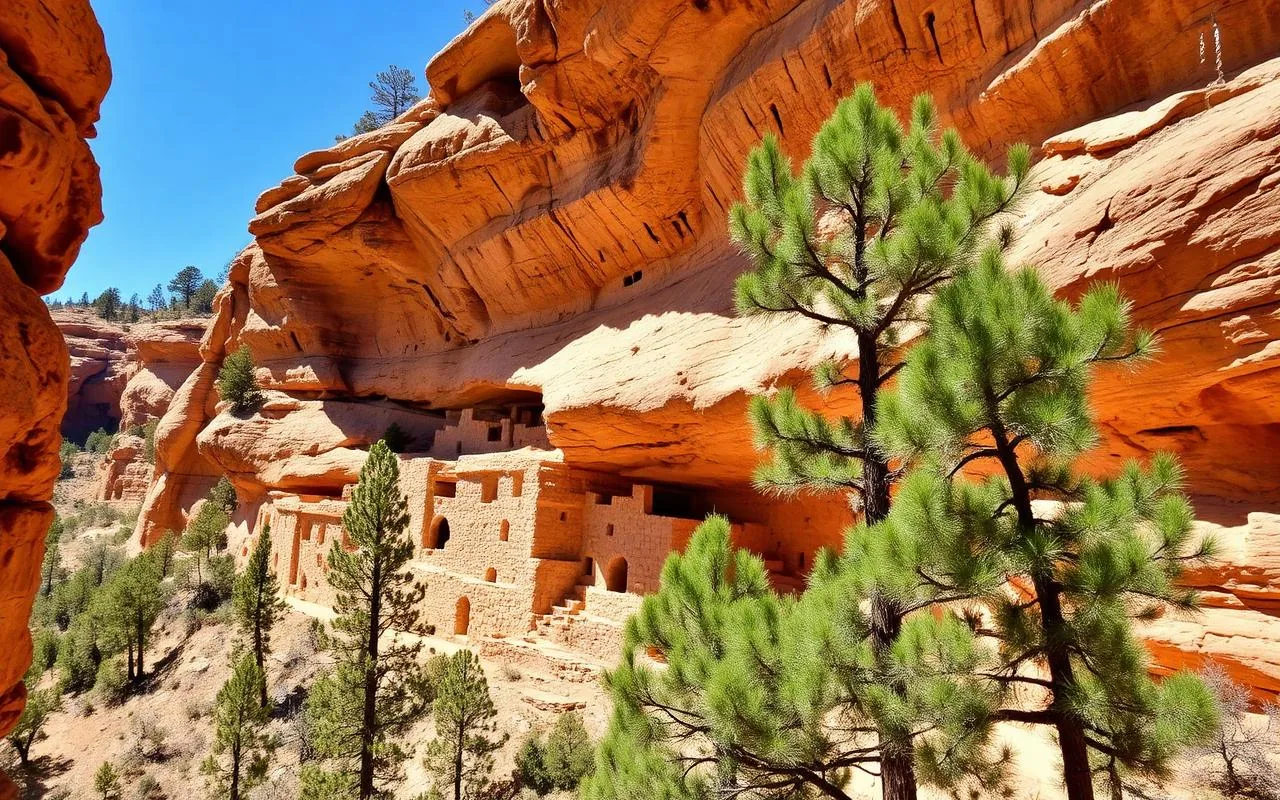
The Island Trail is the reason you come to Walnut Canyon. It is 0.9 miles round-trip with 240 stone steps down (and 240 back up) and it loops around a tall peninsula of rock — the 'island' — that sticks out into the meander of the canyon. Along the loop, you pass 25 small alcove rooms built by the Sinagua people between roughly 1100 and 1250 CE.
You can walk right up to most of them. The stonework is jaw-dropping when you realize it has been standing for 800 years with no mortar repairs — the original mortar, made from clay and pine pitch, is still holding. The rooms are small, T-shaped doorways, and most of them retain their original soot-blackened ceilings. The Sinagua built into these natural alcoves on purpose: south-facing for winter sun, deep enough for summer shade, with a single defensible approach.
The trail is paved but the elevation gain on the way back out is real — Flagstaff sits at 7,000 feet, and you will feel it on the climb. Plan for 60 to 90 minutes round-trip with photo stops, take it slow, and bring water.
The Rim Trail — easier and still rewarding
If the stairs aren't your thing — and that's a completely reasonable position, especially at altitude — the Rim Trail is a flat 0.7-mile paved loop that stays up on the canyon edge. It includes two overlooks of the cliff dwellings from above (the second one is the postcard shot, with the alcoves visible in the cliff face across the canyon), plus a reconstructed Sinagua pit house and a small reconstructed farming plot showing the squash, corn, and beans they grew on the rim. Fully accessible to wheelchairs and strollers.
I have brought visitors who couldn't do the Island Trail because of knees, and the Rim Trail still gave them the experience. It is not a consolation prize.
- Island Trail: 0.9 mi, 240 steps down/up, ~60–90 min
- Rim Trail: 0.7 mi, paved, flat, fully accessible
- Both start at the visitor center
- Plan a total of 2 hours including the museum
Why Walnut Canyon matters historically
The Sinagua (Spanish for 'without water,' which is its own historical irony) were the dominant farming culture in this region from roughly 600 to 1400 CE. They had close ties with the Hohokam to the south and the Ancestral Pueblo to the north, and Walnut Canyon was a major Sinagua population center. The reason they chose this specific canyon was the combination of permanent water in Walnut Creek below, the south-facing alcoves for winter warmth, the deep alcove overhangs for summer shade, and rich farmland on the rim above.
They left the canyon around 1250 CE, likely as part of the broader Southwest depopulation that also emptied Mesa Verde and Chaco. The descendants are the modern Hopi people, who still maintain ceremonial connections to Walnut Canyon and visit periodically.
Fees, hours, and pet rules
Entrance is $25 per vehicle, good for 7 days, or free with the America the Beautiful annual pass. The monument is open daily 9 AM to 4:30 PM most of the year, with the Island Trail closing one hour before the visitor center to give people time to climb back out. Hours expand slightly in summer. Closed Christmas Day.
Dogs are allowed only in the parking area and on the short paved walkway near the visitor center — not on either trail. This is enforced. The visitor center has a small museum with Sinagua pottery, woven cotton textile fragments, and a video that's actually worth the 15 minutes.
Best time to visit
Late spring through early fall (May through October) is the comfortable window, but it is also when crowds and afternoon thunderstorms peak. Mornings are dramatically better, both for crowds and for light on the cliff dwellings — the alcoves face roughly south and look best in late-morning and early-afternoon sun. In summer, target a 9 AM arrival and you'll have the Island Trail mostly to yourself.
In winter, the trail can be icy and is sometimes closed for safety after storms; the rim stays plowed and is genuinely beautiful with a light snow on the limestone. Call ahead in January and February if you're driving from a distance.
Combine with: Walnut Canyon pairs perfectly with Wupatki National Monument and Sunset Crater Volcano for a full 'Sinagua loop' day from Flagstaff. The two northern monuments cover roughly the same time period from a different angle, and the drive between them is one of the most beautiful in northern Arizona.
Frequently asked questions
How long does it take to visit Walnut Canyon National Monument?
Plan 2 hours total — about 60–90 minutes for the Island Trail plus time in the visitor center and museum. The Rim Trail alone is closer to 45 minutes.
Is the Island Trail at Walnut Canyon hard?
It is short (0.9 miles) but includes 240 stairs and Flagstaff's 7,000-foot elevation, so the climb out feels harder than the distance suggests. Take it slow and bring water. Most reasonably fit adults handle it fine.
Can you go inside the cliff dwellings?
Yes — many of the rooms along the Island Trail are open to walk into. Don't touch the original walls, don't lean against them, and stay on the marked path. Damage to 800-year-old masonry is permanent.
Is Walnut Canyon worth visiting on the way to the Grand Canyon?
Yes, if you have an extra two hours. It is a fundamentally different experience from the Grand Canyon — quieter, more intimate, more human. Many people find it more memorable than the South Rim overlooks.