Picacho Peak is the jagged, lopsided silhouette you've stared at on every I-10 drive between Phoenix and Tucson. For years I drove past it too. The first time I actually pulled off the freeway was on a friend's wedding morning in March 2018 — she'd insisted on a sunrise hike before the ceremony, and I assumed I was getting a forty-minute walk through the desert. What I got instead was a chain of steel cables bolted into a cliff and one of the best wildflower mornings I've ever had in Arizona.
In a good bloom year (which is realistically two out of every five) Picacho turns into one of the most photographed poppy fields in the Southwest. In a dry year it's a quiet, technical, slightly intimidating hike that almost nobody else is on. Both versions are worth knowing.
Wildflower season: how to time the bloom (and not get faked out)
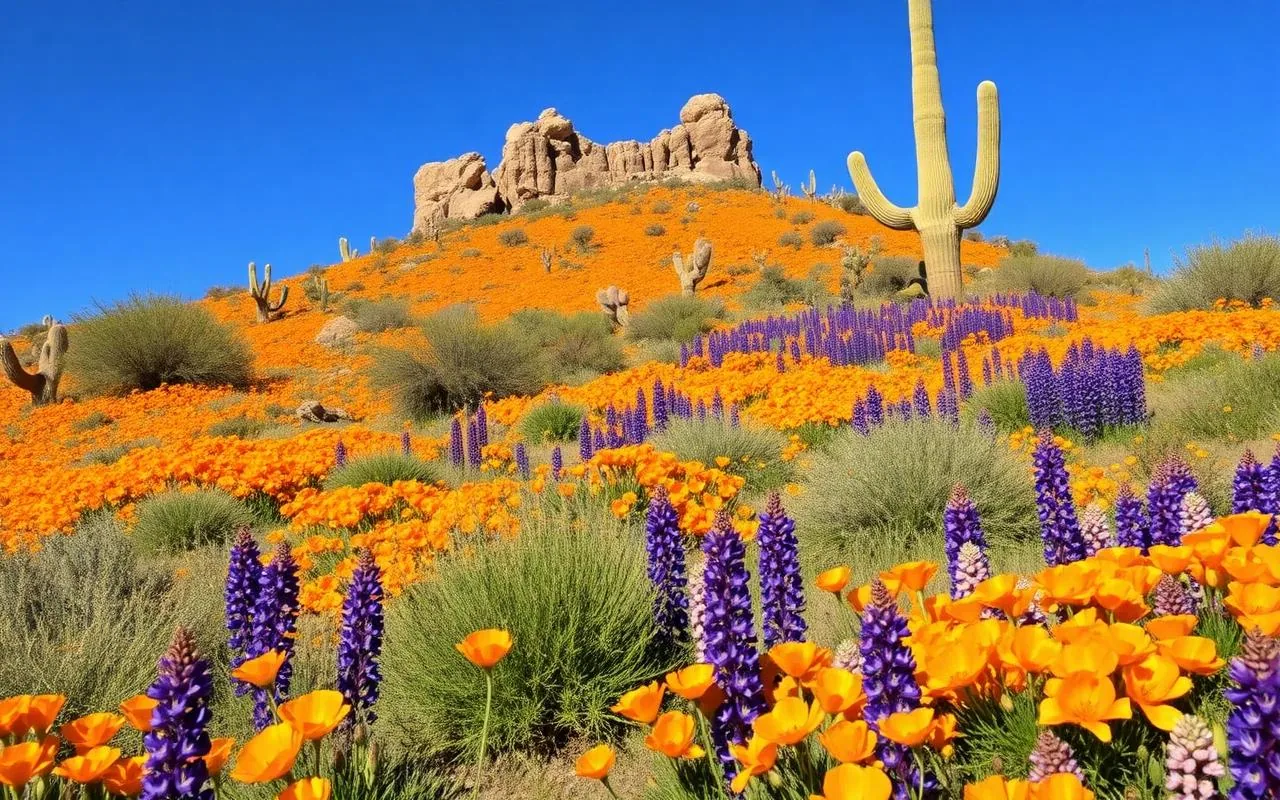
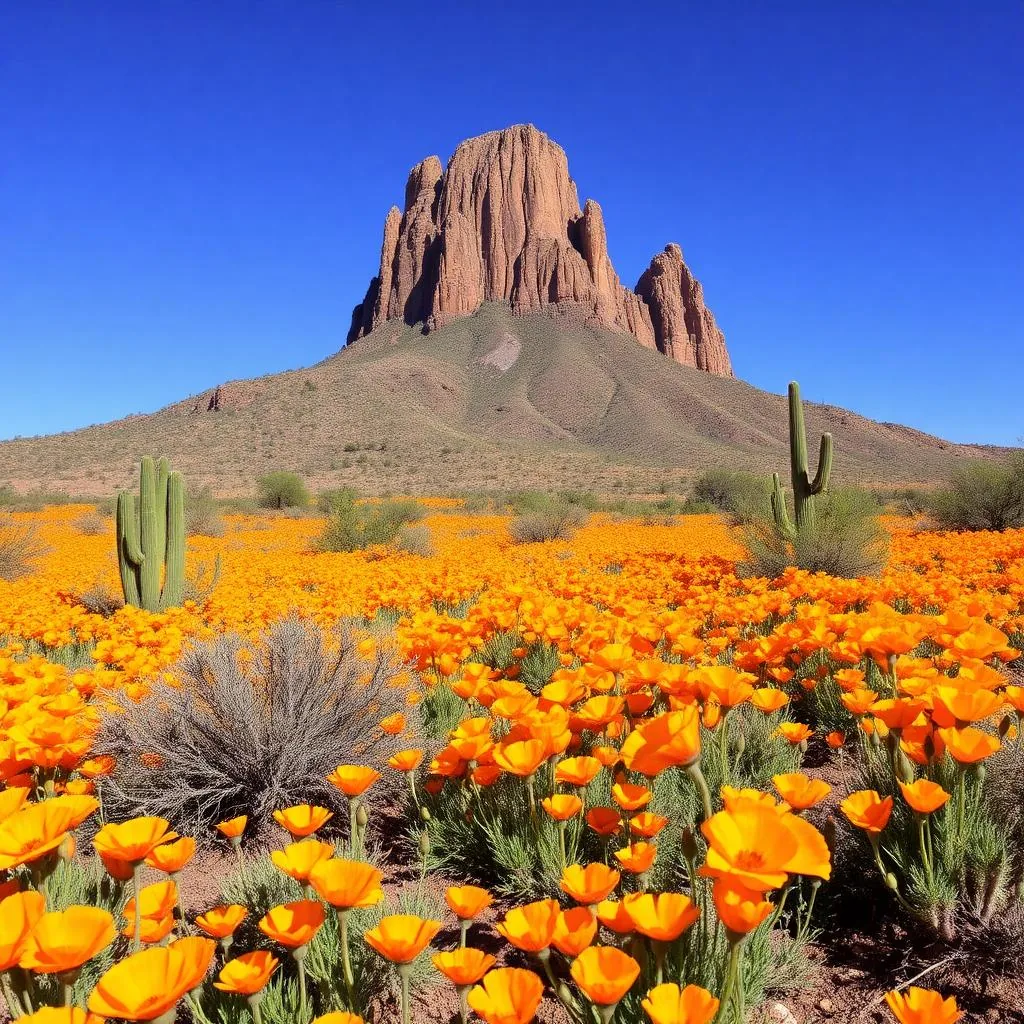
Mexican gold poppies and lupine show up on the lower slopes mid-February through late March, with the visual peak usually landing in the first two weeks of March. The poppies open when the sun hits them and close again by late afternoon, which is why every Instagram shot you've ever seen of Picacho looks the way it does — full bloom, side light, between roughly 9 AM and 3 PM.
Bloom intensity is mostly decided in October, November, and December. A good year needs about four inches of cumulative winter rain plus a warm, frost-free February. After our wet winters in 2019 and 2023, the hillsides looked like someone had spilled paint. In 2022 and 2024 — both dry — there were maybe a few hundred poppies clustered around the campground and the rest of the park was khaki.
Two things I've learned the hard way. First, Arizona State Parks posts honest bloom updates on their website each week from mid-February on. Read those, not the social-media posts from people who drove through three weeks ago. Second, on a true peak weekend the lot fills by 8:30 AM and they start turning cars away by 10. Get there at sunrise or come on a weekday.
Hunter Trail: yes, it really does have cables
The Hunter Trail is the route most people end up on, partly because it's the most direct way to the summit and partly because nobody warns them what they're in for. It's two miles one way with 1,500 feet of gain. The first mile and a half is steep, rocky, and totally normal — the kind of switchbacking desert grind that just makes your calves angry.
Then you reach the saddle, look up, and find a near-vertical wall of volcanic rock with thick steel cables bolted into it. This is the last half mile. You will use your hands. You will pull yourself up cables. You will, at one specific spot, swing your body around a corner over a long drop while holding onto a cable with both hands. It is genuinely thrilling, and it is genuinely not for kids under ten, anyone with vertigo, or anyone who doesn't want their morning hike to involve a brief moment of "wait, am I really doing this?"
The Sunset Vista Trail is the alternate route up — longer at 3.1 miles one-way, gentler in the early going, and absolutely lovely in poppy season. But it joins the Hunter Trail at the saddle and uses the same cable-assisted finish. There is no easy way up Picacho Peak. There just isn't.
- Hunter Trail: 4 mi round trip, 1,500 ft gain, cable-assisted scramble for the final half-mile
- Sunset Vista: 6.2 mi round trip, easier approach, identical hard finish
- Calloway Trail: 1.5 mi round trip to a saddle viewpoint — no cables, family-friendly, my pick for first-timers with kids
- Children's Cave Trail: 1 mi round trip, easy, fun for younger kids
- Nature Trail: 0.5 mi, paved interpretive loop near the visitor center
What it actually feels like at the top
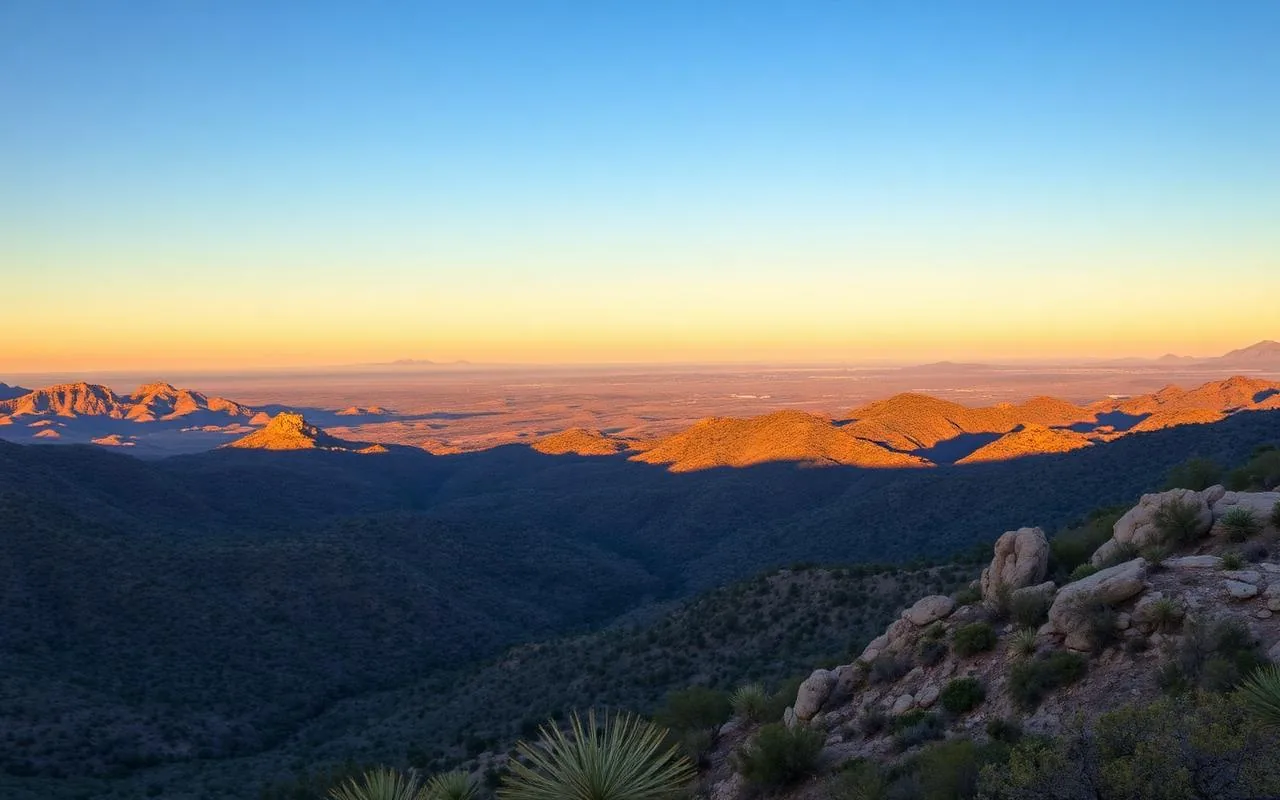
When you finally pull yourself over the last cable, the summit opens into a flat, breezy little plateau about the size of a parking space. The view is enormous: the Catalinas to the south, the Tortolitas, Newman Peak across the freeway, and on a clear winter day you can pick out the white smudge of the snow line on Mount Graham seventy miles east. People who came up the cable section tend to sit down hard, drink water, and laugh out loud at what they just did. Plan on twenty minutes up there before the down-climb, which is honestly harder than the climb up.
Practical details and where to eat after
Entry is $7 per vehicle, open 5 AM to 10 PM. The visitor center has flush restrooms and an excellent little bookstore. There are 85 campsites if you want to wake up under the peak — book those six weeks ahead for bloom weekends, longer for spring break weeks. Day-use parking is divided across three lots; the Hunter Trailhead lot is the smallest and fills first.
Closest food is the truck-stop diner at the Picacho Peak I-10 exit, which sounds grim but actually makes a surprisingly serious breakfast burrito and serves it before 6 AM. If you can stretch your morning another twenty minutes north, the Sunset Point rest area has better coffee. Heading south toward Tucson, BK's Tacos in Marana is my standard post-hike refuel.
When I'd skip it
If the winter has been dry and you don't want to mess with the cables, Picacho probably isn't your day. There are better gentle desert hikes (Saguaro East, Catalina State Park, Sabino Canyon) that don't require commitment. But in a true bloom year, even the Calloway Trail walk to the saddle is one of the prettiest hours you can spend in the Sonoran Desert.
Frequently asked questions
How hard is the Hunter Trail at Picacho Peak?
Strenuous and technical. The first 1.5 miles is steep but normal desert hiking; the final half-mile uses steel cables to ascend near-vertical rock and includes one exposed swing-around section. Plan 3 to 5 hours round-trip with breaks, and don't bring kids under 10 or anyone with vertigo.
When do the wildflowers bloom at Picacho Peak?
Mid-February through late March, peaking in the first two weeks of March. Intensity depends on October–December rainfall — about four inches of winter rain is the rough threshold for a true poppy explosion.
Can you drive to the top of Picacho Peak?
No. The summit is reachable only on foot, and both routes (Hunter and Sunset Vista) merge for the cable-assisted scramble at the top. There is no easy way up.
Is Picacho Peak worth visiting outside of bloom season?
Yes if you want the hike for its own sake — the summit views and the cable section are memorable any time of year. October through April is the comfortable hiking window; summer is too hot to attempt safely.