I have driven past the sign for Tonto National Monument probably twenty times before I finally pulled in. It sits on a hillside above Roosevelt Lake, ninety miles east of Phoenix, on a stretch of AZ-188 that most people are using as a shortcut between Globe and the Apache Trail. The brown national park sign is small. The pull-off is easy to miss. And then you are inside one of the most quietly spectacular small monuments in the entire National Park System, and you are wondering how you didn't make this trip sooner.
From the visitor center, a 0.7-mile paved (and very steep) trail climbs to the Lower Cliff Dwelling — a 19-room Salado-culture pueblo built into a natural sandstone alcove around 1300 CE. From inside the ruin, you look straight out across one of the largest reservoirs in the American Southwest. The original ceiling beams are still there. The original doorways still frame the lake. I'm not a person who tears up at archaeology, and I almost teared up.
Two dwellings, two access models
Lower Cliff Dwelling: self-guided, open daily, $10 per person entry (free under 16), 0.7-mile paved trail with 350 feet of elevation gain. Doable in 90 minutes total including the museum. This is the one almost everyone does.
Upper Cliff Dwelling: ranger-guided only, by reservation, 3-hour round trip over 3 miles, available November through April only. The Upper Dwelling is larger (about 40 rooms versus 19) and arguably more spectacular, but the slot count is tiny — typically two tours per week with twelve people each. Book 2+ months ahead through Recreation.gov. Spots disappear within an hour of release.
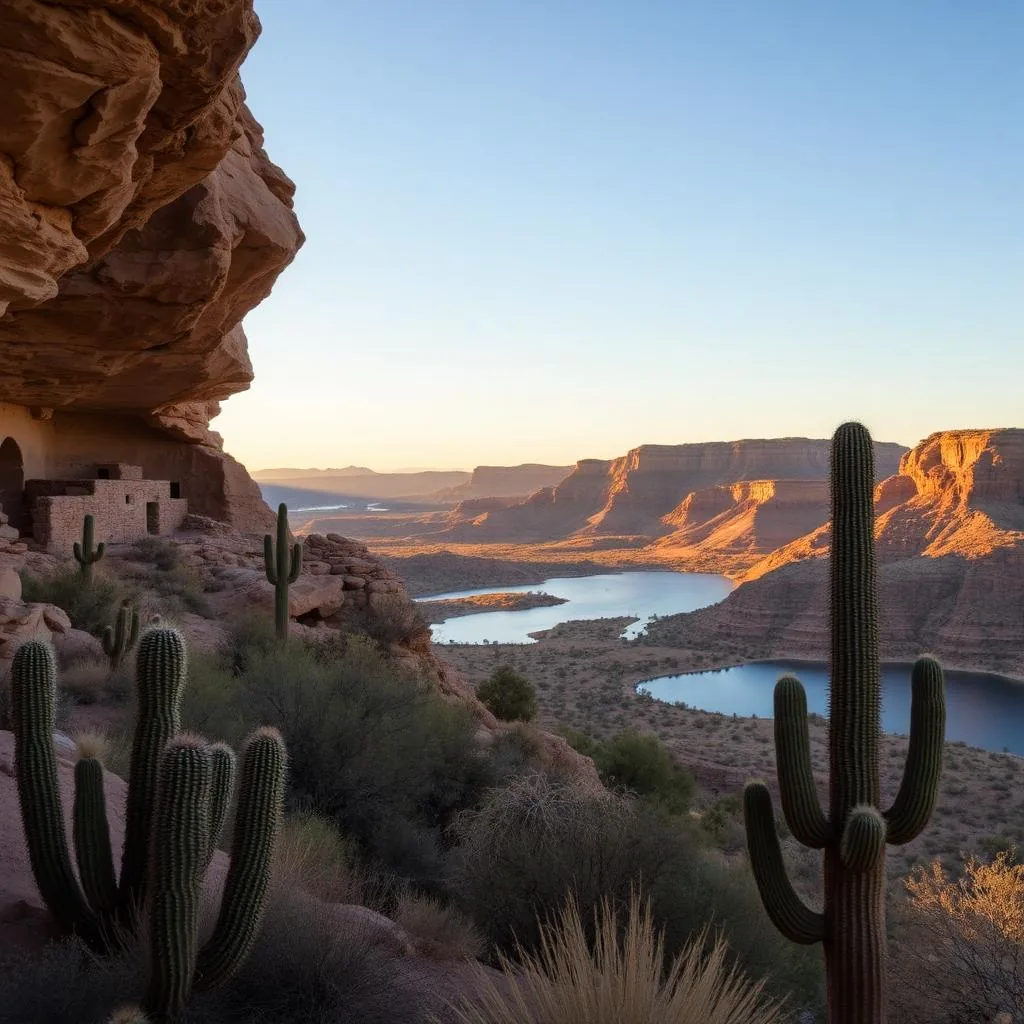
What you actually see inside
Standing inside a 700-year-old room with the original ceiling beams — saguaro ribs and juniper, preserved by the dry alcove climate — looking out the original doorway at a turquoise lake, is the kind of experience that's genuinely hard to overstate. The rooms are small but multi-story, and the soot from cooking fires is still visible on the alcove ceiling above them. You can see where corn kernels got ground into the bedrock. You can see where someone smoothed adobe plaster with their fingers, and the fingerprints are still there.
The Salado were a regional culture (roughly 1200–1450 CE) that combined elements of the Hohokam from the south, the Ancestral Pueblo from the north, and the Mogollon from the east. Their distinctive polychrome painted pottery — black, white, and red on a buff background — is on display at the visitor center and is, in my opinion, some of the most beautiful Indigenous ceramics in the Southwest.
The drive: Apache Trail or US 60
Two ways to get there from Phoenix, and they are very different experiences. The fast way: US 60 east to Globe (2 hours of highway), then AZ-188 north to Tonto (another 30 minutes). Straightforward, mostly four-lane, a few good viewpoints around the Salt River Canyon Wilderness boundary.
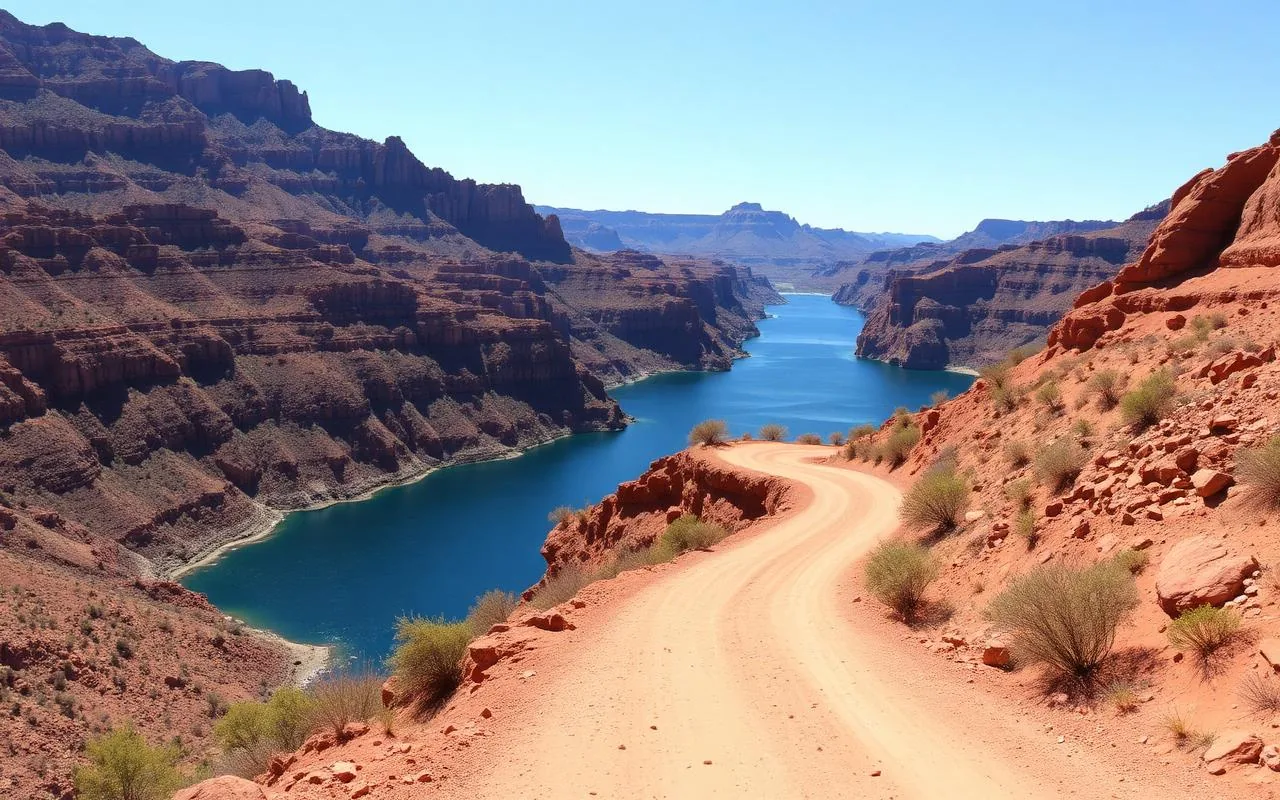
The scenic way: the historic Apache Trail (AZ-88) from Apache Junction. This is a 40-mile mostly-dirt road that winds along Canyon Lake and Apache Lake before reaching Roosevelt Dam. The Fish Creek Hill section has been closed to through-traffic since the 2019 storm damage, so check the ADOT website before you commit. When it is open, it is one of the most spectacular drives in Arizona. Add 90 minutes plus all the scenic stops you'll inevitably take. Most visitors I send out there do US 60 in, Apache Trail back — that way you do the difficult dirt section downhill with the light behind you.
Pair it with Roosevelt Lake and the bridge
Roosevelt Lake itself is worth ninety minutes. The Theodore Roosevelt Dam, completed in 1911, was the largest masonry dam in the world at the time and is still one of the most beautiful dams I've ever seen — curving white stonework set against red rock, lit dramatically at night. Five miles south of the monument, the Roosevelt Lake Bridge spans the water just downstream of the dam in a single 1,080-foot arch — at the time of construction in 1990, the longest two-lane single-span steel arch bridge in North America.
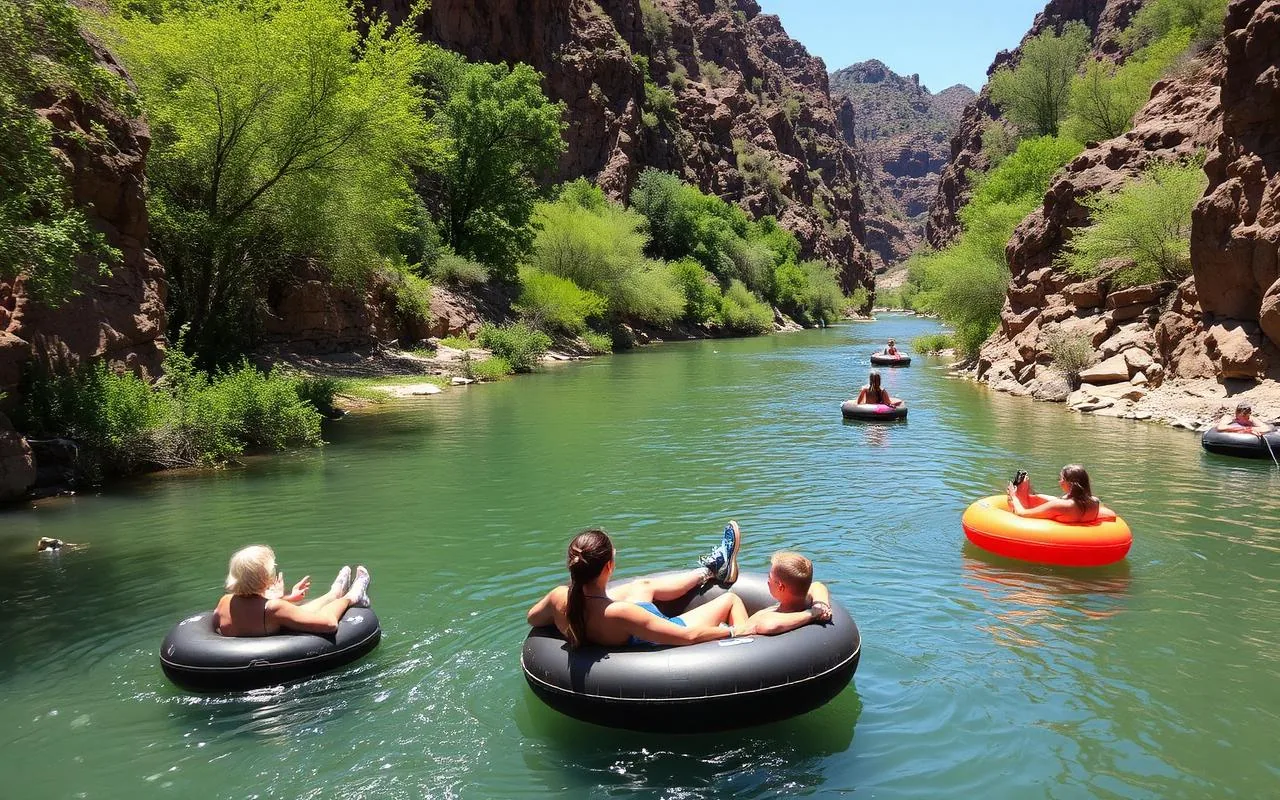
Stop at the dam overlook on the south side, drive across the bridge for the long view of the lake stretching east, and if you have time and want to swim, the Schoolhouse Point and Cholla recreation sites have actual beaches. Roosevelt Lake Marina rents boats and kayaks.
- Lower Cliff Dwelling (self-guided, 90 min)
- Upper Cliff Dwelling (ranger tour, reserve ahead, Nov–Apr only)
- Visitor Center museum (Salado polychrome pottery)
- Roosevelt Dam overlook (5 mi south)
- Roosevelt Lake Bridge crossing (free, dramatic)
- Apache Trail (AZ-88) scenic return route — check ADOT first
When to go and what to bring
November through April. The trail is fully exposed, mostly south-facing, and summer afternoons regularly hit 110°F. The Park Service closes the Lower Trail when temperatures climb past 100°F — you can drive ninety miles and find the gate locked. Winter is ideal: cool, clear, and the Upper Cliff Dwelling tours run during these months only. Sunrise visits are genuinely magical, with the alcove glowing warm gold against the cool blue lake.
Bring: at least 1 liter of water per person (more in shoulder season), real shoes (not flip-flops), and a hat. The paved trail has handrails on the steepest sections, but the grade is no joke for anyone with knee issues. Cell signal is spotty. There is no food on-site beyond the small visitor center store — pack snacks.
Frequently asked questions
Do you need reservations for Tonto National Monument?
Only for the Upper Cliff Dwelling guided tour, which runs November through April. The Lower Cliff Dwelling is self-guided and walk-up year-round.
How far is Tonto National Monument from Phoenix?
About 2 hours east via US 60 to Globe, then AZ-188 north. The scenic Apache Trail route from Apache Junction adds about 90 minutes plus stops, and may be partially closed at Fish Creek Hill — check ADOT before committing.
Are the cliff dwellings accessible?
The trail is paved but steep with 350 feet of gain. It is not wheelchair-accessible and is genuinely difficult for visitors with mobility issues. The visitor center museum is fully accessible.
What did the Salado people farm?
Mostly corn, beans, squash, and cotton along the Salt River bottomlands below the dwellings. The cotton in particular is notable — they wove it into intricate textiles, several of which survive in regional museum collections.